Monday, January 25, 2021

Adventures in Coding

 I can code. In my school library, students explored MicroBits and Bloxels. I was on the STEAM Family Evening Planing Committee at my school. I've even helped offer workshops on coding last March under the leadership of the incomparable Peter Skillen and Code to Learn

Coding is now a part of the revised Ontario math curriculum.  I chose to focus on coding for two weeks with my students because I thought it might be easier to address coding while we all had technology at our fingertips everyday and less need for dividing into the different grades for math class. In principle, this was a good idea. Teaching coding on your own through virtual schooling to meet curriculum expectations is an entirely different matter. I forgot everything I knew. I floundered. Then I reached out to friends.

Diana Hale and Farah Wadia gave me some advice and links. I signed up for CSFirst (Computer Science First) which is a partnerships with Google. I created a teacher account, selected a pre-made project to assign my class, and jumped in.

Today is the last day of our coding unit in math. Every student will be given two minutes to share the results of their coding journey. I was very pleased with the results. Here's why.

1) The students led the learning.

The student interface is quite different from the teacher interface. Don't get me wrong; I appreciated the teacher view, especially where it tracked the progress of the students as they worked through the tasks. However, our students were the ones who brought up problems and then solved them. Our math class started to form into a predictable pattern - after the morning exercises (anthem / land acknowledgement / attendance - all requested by the students to keep things as "school-like" as possible), the floor would be open for students to ask for help from others on portions of their coding that they were stuck on. Other students would chime in, describing potential solutions. Some students exited the Google Meet because it was too laggy to remain on while coding in Scratch, while others stayed in the Google Meet and worked on another tab. We'd all reconvene ten minutes before the end of the double period to share any successes and share any further issues. My role was to facilitate the conversations, offer lost passwords, and check progress.

2) Some students who usually dislike math enjoyed and embraced coding.

Some of the students really got into coding. Many finished early and it was a team of students that selected the second required assignment. I didn't want to overdue things by assigning a third, so I suggested to students who were still completing assignments ahead of time to select other challenges on the website to do. One student decided to invent his own game. The great thing was that it wasn't always the "typical high-flyers" that did well in this coding unit.

Here are some of the projects that students have created. (I chose to highlight samples that do not include student names.)


Monday, January 18, 2021

Not Okay

 I am going to immediately contradict the title of this blog post by saying that, in the grand scheme of things, I am actually fine. 

I wrote this tweet a little over a week ago. I had to take my father to the hospital because, after a three-way phone call with Telehealth Ontario on January 6, the registered nurse recommended he go to the ER ASAP because of issues he had been ignoring. I took him to his GP January 14 for his follow-up appointment. This will result in more appointments with specialists and possibly an operation. There are some positive developments as a result of this conversation with his physician, thank goodness. I'm relieved that things are being dealt with - but my dad is not okay.

I changed my Zoom background to a photo of my classroom, but I had to remove it. The image was too much for some of the students and hurt their hearts; they said it reminded them too much of what they cannot currently have. This past week, I had to inform my 24 students that we were not returning back to in-person school until February 10 (5 weeks away, not the original 2 as I thought on January 8), and there is a chance that this date may be delayed even further. I keep a copy of every day's back-channel / chat box, and I have to share that reading the written reactions of the students was heartbreaking. They were so upset and even though we worked hard as a group to deal with the unhappy news - my students are not okay.

This past weekend, I composed an email to a parent who shared how the recent two weeks of pivoting to virtual learning has been for her child. I felt compelled to reply, even though it is recommended that teachers do not answer emails during off-hours. This poor mom was frazzled and worried - as you can guess, these parents are not okay.

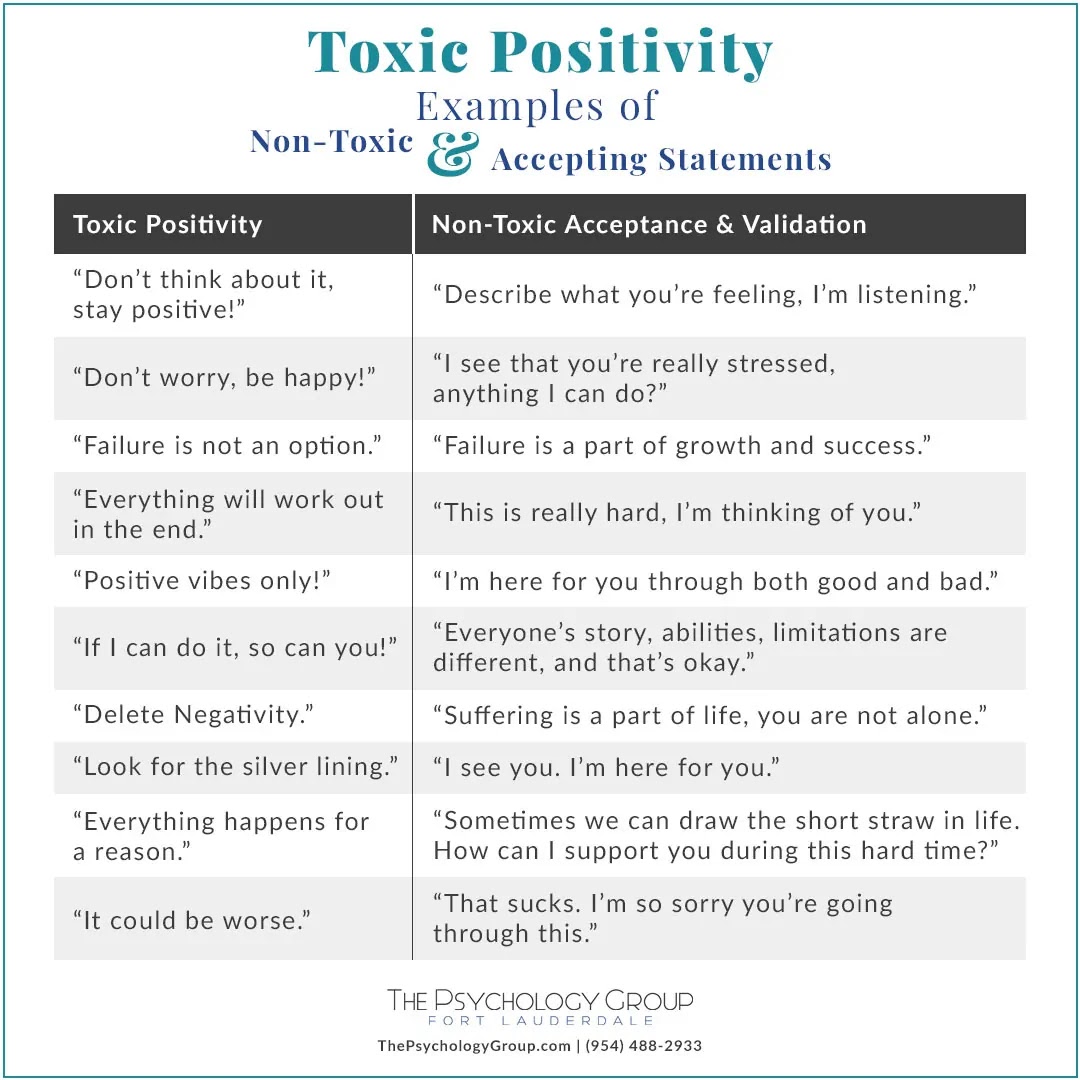
I thought about continuing this blog by focusing on toxic positivity (here is an article published December 2020 on the topic) or trauma-informed teaching (in fact, this article from Tolerance.Org deals directly with trauma-informed teaching related to the COVID-19 pandemic), but who has time to research, read and digest these things? I've got report cards to write (although I'm nearly finished all of my report cards because I devoted time each day during the holiday to address a portion of the marking, calculating, or comment-writing).To paraphrase someone from Twitter, it's not enough to send your employees an email with a link to mental health resources. My principal is doing a good thing - he's booked a regular "touch-base-time" with his staff every Tuesday. It's less of a staff meeting and more of a wellness check to see each other and see how we are doing.


So, for those parents who are not okay: I see you. I'm here for you. Forget about forcing your child to complete work, especially if it makes things unpleasant at home; we'll get to it when we can.

For the students who are not okay: This situation stinks. I'm sorry you have to deal with this. I will continue reduce the workload and try to make our time together as fun as possible and maintain as many of our regular routines as we can.

For my own father who is not okay: I'm here for you through both good and bad. I know you are worried about me having to take you to doctor's appointments and you are super-stressed about your health and mom's care; I am here to help and I promise to take care of myself.

For me, who is okay most days but has a slip now and then: I've got some wonderful friends and my immediate family (hubby James, daughter Mary - who turned 21 this weekend - and son Peter) who are keeping a sharp eye out for me. I won't beat myself up over the should-haves or could-haves (especially related to exercise and how I spend my time) and just keep my one-word mantra in mind: be well.

Monday, January 11, 2021

Stay At Home Circus and Collaboration Matrix

 I survived my first week teaching my class virtually - and it's a good thing I survived, since I have to do it again for at least two more weeks! I am really proud of how resilient this group of Grade 5-6 students are, because despite missing in-person learning, they have adapted to this different routine and done quite well so far. 

I prefer face-to-face instruction. I didn't want to adjust to teaching through a screen, even though I technically didn't have a choice. My husband noted, however, that there were a few moments when he said he could hear bits of joy leaking from my voice during the school day. I wanted to share something I've developed for the virtual learning environment (as well as something from my longed-for in-person teaching/learning environment) that I'm really happy with and were reasons for that "joy-leak".

Stay At Home Circus

This idea was inspired by Lisa Daley, a phenomenal teacher who has been teaching virtually since September. Several of us who were moving (hopefully just temporarily) to virtual in January were wondering how on earth to do physical education at home. Lisa suggested this game that involved rolled-up socks. I read Lisa's description and a picture formed in my head of juggling those socks, which led to a eureka moment - a Home Circus!

This project covers physical education as well as drama expectations (and we will squeeze some language expectations in as a bonus).  

First, we explored our prior knowledge of the topic. Some of the students have been to circuses before, but some have not. One student referenced the movie Dumbo, which was a great text connection. We skimmed a non-fiction article about the basic elements of a circus. For each class, I plan on giving a brief overview of the skill or talent, modeling it, and then allowing students time to practice and capture their efforts. We have two gym classes and two drama classes this week. For physical education, we will transform ourselves into balance artists and jugglers. For drama, we will become animal trainers (with stuffed animals) and clowns. We will continue to explore gym-connected and drama-connected circus acts, and the final task will be for them to become ringmasters and create their own little circus with acts of their choice at home that we will record using FlipGrid.

I have emphasized to the students that actual circus performers spend years perfecting their craft and that we are just scraping the surface. I also stressed that safety was a priority - so (for instance) no balancing items that could break or hurt the performer if they fell!

Here is a replica of what I looked like when sharing my balancing act, in my curtained off, green screen area of the basement where I teach all day.


My husband even got in on the act after school too - to my chagrin, he's way better at it than I am.


We also used the TDSV Virtual Library to access two picture books that we used as guided reading anchor texts, so that we could further our understanding about circuses. (Thank you Andrea Sykes and the library people still supporting this important resource!) We will eventually get into controversies with circuses (i.e. poor treatment of animals and people), explore sayings related to circuses, and other media aspects, if all goes to plan.

Four students gave me their consent to post pictures of their balancing attempts. I am still covering their faces for privacy purposes and have tried to crop their photos so the insides of their houses aren't shown too clearly. I adored seeing these attempts and the other students are eager to see what sort of things their classmates created.


I'm not a fan of marking, but I can't wait to see the final results from these talented performers!

Collaboration Matrix

Now, before you get the impression that I love teaching virtual, please let me correct you. There are so many more things we can do in-person that just can't happen using Zoom or Google Meet. I didn't want this post to only laud a digital task, which is why I'm mentioning my collaboration matrix.

I have no clue where or how I learned about this tool. I know that I used to use it when I was a classroom teacher for summer school - it was a big easier to use back then because there were fewer students. 

It's a pretty simple thing, really. I took a large grid chart paper and wrote all the students names along the top and along the side.


When students work with other students, such as in small group drama exercises, small group gym teamwork drills, or other formations of their creation, I track whom they've worked with. I told the students that my goal for them is that they try to ensure they have worked with every other person in the class at least once. Usually, people (not just kids) only want to work with their friends, or people they match personality-wise. This device encouraged the formation of new groups.

There are several things that I love about this glorified tracking sheet. 
First, having it posted large like this is an indication that collaboration is a valued skill in the class.
Second, it makes writing report cards, especially those tricky learning skill sections, easier. I actually record the fraction as part of my comments.
Third, the students have internalized this and prioritized this. If I announce that a task will be undertaken in small groups and that they can select the pairs, trios, or other configurations, the first thing that many students will do is consult the collaboration matrix. If they notice that they have not yet worked with someone, many students take the initiative (see, more learning skills!) to approach that individual and invite them to work together. This means I see fewer examples of students standing alone, unsure of how to join a group or find a partner, because partners will often seek them out. It warms my heart to see the students crowd around the matrix so they can make wise choices for group work. I look forward to the time when we will be together in-person again. When that will be, I have no clue. In the meantime, I'm running away to join the circus (online)!


Monday, January 4, 2021

Expect the Unexpected and #OneWord2021

 I am composing this blog post much earlier than I usually do, because right now (December 27) as it stands, starting January 4, 2021 (the day this post goes live), I will be teaching my Grade 5-6 in-person class virtually for at least a week. I suspect that I will be busy for days beforehand preparing for this "pivot". It's not like I haven't been busy this holiday time. Every day so far, I've spent at least part of it marking student work or calculating grades or scripting comments for report cards. 

Usually at this time of year, I contemplate what my "word of the year" will be and reflect on last year's word. Last year's word was truly ironic. It was PUSH. I thought I was going to push myself physically at the gym, push the creative boundaries of school librarianship, push against injustice and push others into positive action. 2020 had other ideas. It pushed me into roles that I felt completely unprepared for, as a classroom teacher. It pushed the limits of my patience, pushed aside my sense of safety and security (with strikes and COVID quarantines), and pushed me way out of my comfort zone (in good and bad ways, thanks to taking AQ courses and keynoting conferences and writing AQ courses). This darn pandemic pushed me to behave in very certain ways and deprived me of things like summer visits to Baltimore, or hugs with friends. Yes, push was certainly a timely word; I was just more on the receiving end than I thought I would be.

This year's word came to me in a flash of inspiration as I lay in bed, wondering about 2021 and all the things I need / should / have to do.

well


This image is licensed under the Creative Commons Attribution Share-Alike 3.0 Unported, 2.5 Generic, 2.0 Generic and 1.0 Generic license. Credit goes to User Rept0n1x at Wikimedia Commons and the link can be found at https://commons.wikimedia.org/wiki/File:Fleetwood_round_table_wishing_well_-_DSC06564.JPG 

I looked up the definition and liked the variety shown by Google's English Dictionary (provided by Oxford Languages). Well as a adverb, adjective, explanation, noun and verb all seem to work for me this year.


In 2021, I want to teach well, (in a "good or satisfactory way") and cover the curriculum as well (in a "thorough manner") as I am able.

In 2021, I want be stay well (in "good health") and make decisions that could be described as well ("sensible, advisable") .

I expect 2021 will provide me opportunities to "express a range of emotions, including surprise, anger, resignation, or relief". I didn't expect what 2020 had in store - I should expect the unexpected for 2021. I'm sure I'll still be surprised.

Merriam-Webster's dictionary definitions illuminated why this word works for me as a noun and verb


A well is a "pit or hole sunk deep into the earth to reach a supply of water". I suspect I am doing to have to dig deep at several points during the year, to draw on my reserves to sustain me and keep me going.

When things well up, this "rise to the surface and usually flow forth". I'm going to need for good things to well up and out, from deep within, to continue to survive all these continued challenges. 

I'm not looking for excellence, or going above and beyond. I aim for "well".

Do well.

Be well.

Stay well.


Monday, December 28, 2020

Presents and P3s

 This is my last blog post of 2020! What would be worth reflecting on when ending this unprecedented (an adjective I'll be glad to be rid of) year?

Now that Christmas is over (or at least the gift-giving part; technically for Catholics and Christians, this is the end of Advent season and the beginning of the actual Christmas season, ending at Epiphany), I can finally share photos of what I gave my students and staff.


I was pretty pleased with the presents I gave, because they were personalized and partly home-made. For my students, I went through the hundreds of photos that I take during the school day and selected individual photos of each student to populate student-specific photo albums highlighting our 3-4 months together as a class. We couldn't take any group photos, so I created a collage of all their Face Your Manga avatars that they created for a Health assignment and used that as our "class photo". I was worried that the mini-photo albums wouldn't come in time, so I also made personalized book marks with metal owl charms attached. Thankfully the albums arrived early enough for me to build them and wrap them. I realized it made an impact when I received several emails from students and parents thanking me for the gift. Some of the students coordinated their unwrapping together with a digital conference call and they reported that they were surprised and delighted with the big reveal. 


I struggled with deciding on my staff gifts. Usually, I give a donation to a worthwhile charity in their honour, but since we are such as small group this year (just 10, excluding me and counting office, teaching and support staff), I decided to do something different. In addition to the cards and Christmas tree ornaments I gave all my in-building colleagues (including caretaking and lunchroom supervision staff), I sewed these little beds and pillows. Inside the beds were Bitmojis of the staff (thanks Farah for sharing the file!) along with two gift cards and a note urging them to rest, read and rehydrate.

It is better to give than receive, but both happened. My colleagues and students were extremely generous. It's been decades since I was a classroom teacher, so I didn't expect all the presents. My favourite parts were the words and items crafted by the students themselves. One student wrote and illustrated an 11-page comic for me called "The Best Christmas". (It's a holiday-themed LGBTQ romance!) Another student hand-made an Animal Crossing New Horizons gift card holder.


None of these gifts were necessary, because the students have given so much of themselves, especially when they presented their P3 (Personal Playlist Project). This past summer, I had the pleasure of creating my own P3 and sharing it on Noa Daniel's podcast. I decided to do this project with my own Grade 5-6 students and it was a HUGE success. I don't mean that everyone earned A+ on the assignment; it was so much more meaningful and impactful than that. I plan on getting together virtually with Noa to share the specifics of some of the meaningful moments, but let me briefly explain why the P3 was such a gift to me and to my students.
  • Everyone participated. Two of my students spend half the day with another teacher and she agreed to incorporate the P3 into her program so that all 25 students could be involved. She had to provide a huge amount of support but it really built our class community. No one "forgot" to finish, even though for some, presenting in front of the whole class made them very nervous.
  • Students cared about their P3s. Many times, during our individual two-minute-chats, the students would initiate the discussion by stating, "I want to talk about my P3". Choosing the right song was very important to them. They worked on it at home, with great attention to detail. One student who tends to be laissez-faire about assignments and due dates actually negotiated with another student to present earlier than his designated time, because he was so excited to share. Another student created a music video with personal photos accompanying the music. Many students talked with their family members to help them decide on their songs; I would have loved to have listened in on those conversations.
  • Students cared about each other's P3s. In November, we used a random name-selector to determine which two students would present each school day in December. These due dates were serious business. If one of their classmates was away, other students would ask if it was his/her P3 day; they were very worried that someone might miss their opportunity. I also liked how attentive they were to each other. Some students credited other students with inspiring them to select a more appropriate song - they spent a lot of time revising their choices.
  • Students shared so much of themselves. I was blown away by how vulnerable the students were, sharing their doubts, darkest moments and insecurities as well as their private memories of family and friends. These songs, some in Tamil, some in Mandarin, some in Korean, revealed so much about the students' interests, values and self-concept.
Noa, thanks for a wonderful project design. I almost hate having to assign a letter grade for this work, because this project was so much more than the marks they'll receive. It was a wonderful thing to do in December. I'm playing January by ear right now, as we will start with one week of virtual learning, followed by who-knows-what. Whatever it brings, at least I know that the Grade 5-6s of Room 206 had a rich and meaningful in-class experience in the last third of 2020. 


Monday, December 21, 2020

Hole In One

 Why would I ever antagonize the caretaking staff, especially considering how hard they are working lately with all the extra COVID-19 precautions?

I didn't mean to, but Project-Based Learning is messy!

If you recall, I was fortunate to receive a donation of golf putters to use in my physical education program. The students developed their own putting techniques based on the advice of kindergarten teacher and avid amateur golfer Mr. Tong. After we finished our golf unit in gym, Mr. Tong faced off against our best student putters in a tournament. Technically, Mr. Tong won, but he created a "trophy" and gave it to the top student in the tournament. Thank you so much, Mr. Tong, for a thrilling end to our golf unit in gym. The competition was intense but super-fun!


The thing is, golf influenced other areas of our curriculum. As the students practiced putting, they wanted to add more challenges, such as hills and ramps. We created "chipmunk-sized" golf courses on our desks with marbles, popsicle sticks and various loose parts as a fun break after a particularly grueling test.

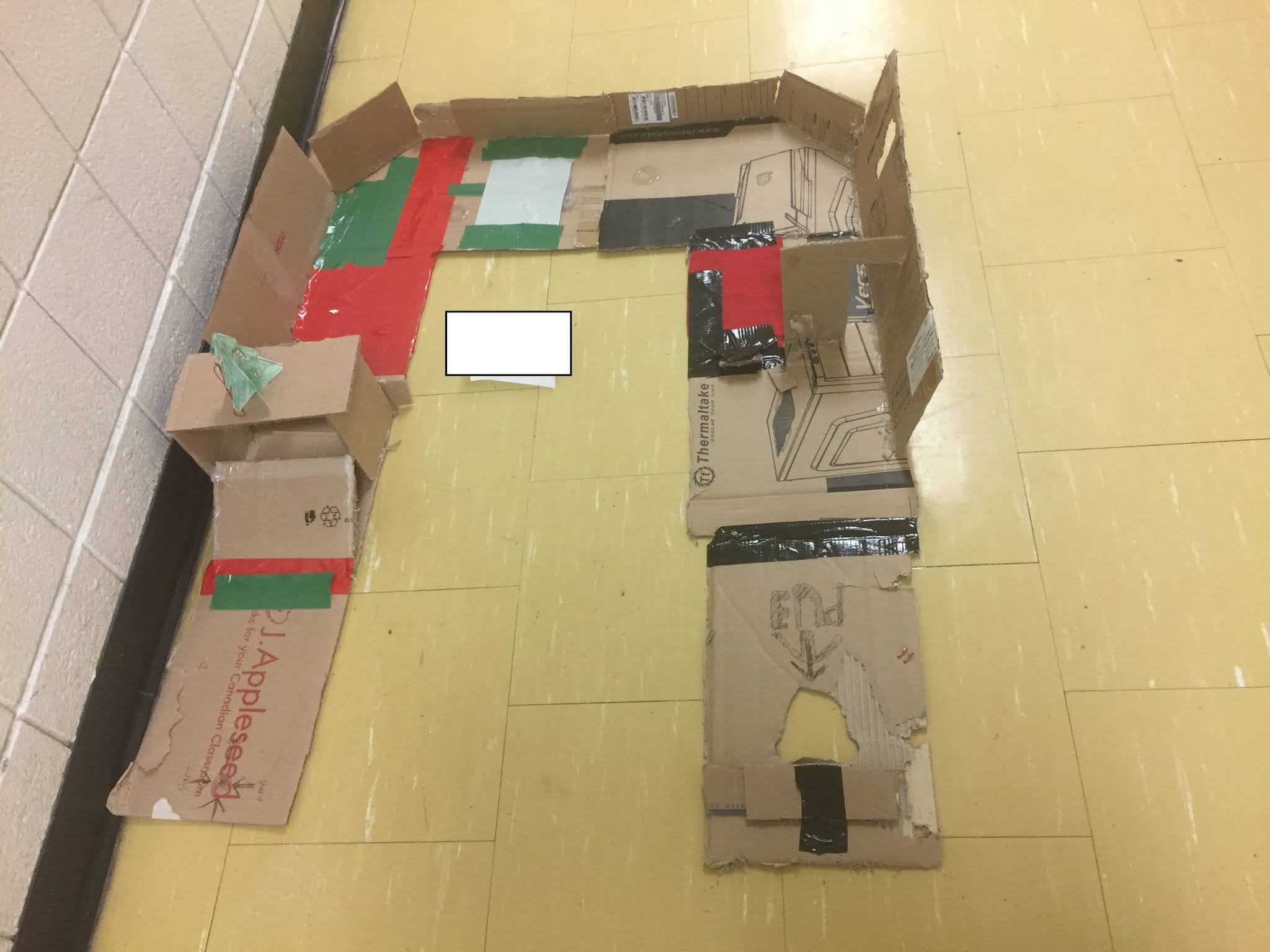
This inspired us to design and create our own mini-putt golf courses that we could use ourselves.

We connected this with our math unit around area of shapes and with the Grade 5 science unit on forces acting on structures and mechanisms. We also added a bit of visual arts / media as well as some drama as I took on a "teacher-in-role" as a Home Depot employee. Students knew that if I wore the orange apron, Home Depot was "open" and they could request materials for building their golf courses. The only pre-requisite to acquisition was providing the dimensions and the area of the type of material they requested.

I was absolutely awed by the energy and effort that my students put towards these projects. Everyone was able to submit something, which is quite impressive when I look at my statistics for regular homework completion. Students begged to stay in at recess and after school to build their courses. 

Here are the finished products, with the names of the students digitally covered to protect privacy.


I'm sorry that we were unable to keep the golf courses out - as you can imagine, 22 mini-putt courses in the hallway created quite the unintentional obstacle course. We only had a single day to play them before we had to throw them away or take them home. I'm glad I was able to take photos of the courses themselves, the courses with the creators, and videos of most of the courses being used. It was a wonderful way to end our most-unusual 2020 school session. 

Monday, December 14, 2020

Finger in the Library Pie

 I had to look this up, because I knew what I wanted to say, but not how to say it.


When I haven't done something for a while, I get out of practice. This is true when I play video games. I haven't been on as regularly on Animal Crossing New Horizon as I used to be, because of my school workload, and I can tell: I nearly forgot how to wish on stars and collect star fragments. I had to look up in the manual how to load my bobbin in my sewing machine, because it's been so long. 

I haven't been in my teacher-librarian role officially since September 2020 and performing my regular duties related to the job since March 2020. I worry that I will forget how to do things. However, there are at least two things that are helping me keep my "finger in the pie" of Library Land.

Writing an AQ Course

I don't know if this is allowed to be public knowledge (so if it isn't, I'll keep the name of the institution secret). I was hired in the summer to write the Teacher-Librarian Part 1, Part 2 and Specialist course for an organization that is accredited to provide the course and qualifications. This was a great honour and privilege, and especially timely because I was on the team that revised the guidelines for these TL AQ courses with the Ontario College of Teachers. 

I am so grateful to my critical friends who encouraged me and offered suggestions. I am also thankful for the support I have received from my liaison, who has provided excellent guidance and has been accommodating with extensions.  It wasn't easy! Some of the project has been submitted already and some will be due shortly. I hope that the assignments and tasks I have designed will make taking the courses interesting, informative, and helpful. I examined the feedback written by AQ candidates who took the previous version of the course and used their advice to shape the course, hopefully for the better.

ETT Library Ad Hoc Committee

It began with this tweet:

Johanna Lawler, OSLA council member and school library advocate, wrote back and recommended that our ETFO local has a Library Ad Hoc Committee. This led me to create a tweet in response.
 
A few displaced Toronto teacher-librarians have contacted me privately to indicate their interest in being part of that committee. Since I haven't heard from ETT yet, I will take Johanna's advice and start the necessary steps to make it possible. It's not like I need more work to do. I'm still swamped with marking and I dread the upcoming switch deadline, which I'm sure will need to more upheaval and unrealistic expectations placed on educators. However, I think it's important work to do, and it's a way of staying involved in matters related to school libraries even when I can't be there.