Monday, May 11, 2020

Animal Crossing New Horizons - Popularity and Possibilities

I think this is the first time that I will have posted an identical blog post in three different virtual places simultaneously:

(L-R) Mary, Peter, Diana

This is because the topic is relevant to all three sites: my recent use of the video game Animal Crossing: New Horizons.

Animal Crossing: New Horizons is a video game produced by Nintendo for the Switch console system. It has become a very popular game to play during the recent global pandemic for many reasons. This game set sales records and created buzz in the mainstream media.  This article consulted game developers and asked them to explain the reason for the game's popularity. They mention things such as:
  • a relaxing escape via the comfort of doing daily tasks
  • the desire to "do your best" for your village and villagers
  • rewarding for those who like structured tasks and those who like to explore/discover
  • feeling accomplished/euphoric when tasks are accomplished (the hook)
  • ability to achieve at your own pace without time pressure and complete collections
  • agency / ownership and social aspects - joy without harm

I can tell you why I enjoy the game. 

1) It's something to do that is enjoyable and can use many hours.

Animal Crossing: New Horizons is a lot of fun. There are so many things to do each day. You can go shopping (at Nook's Cranny or The Able Sisters, plus the assorted vendors that show up in the town square to buy and sell their specific wares - anything from Leif with his flowers to Daisy Mae, who offers turnips only on Sunday mornings for the stock/stalk market and trended on Twitter last week). You can visit others, whether they are "real" or not. Fishing, gardening, bug catching, shell collecting ... I can spend hours playing and it helps pass the time. It's a place to go when I can't actually physically go anywhere right now. As this article from the Daily Mail suggests, the game eats up your spare time and many people (who aren't essential workers) have a lot of spare time on their hands right now.

I got stung by wasps but I'm okay!


2) The game has cross-generational appeal, and not just for "gamers".

In my nuclear family of four people that reside in my home, three of us play Animal Crossing: New Horizons (which I will refer to in the rest of this post as ACNH) every single day. The game demographics are quite wide. The rating of the game suggests that it's for children, but this article by the New York Times describes its appeal to millenials. Dr. Romana Ramzan, an expert quoted in this article, explains how the game is attractive on multiple levels. Children can do adult things, and adults have a gentler, idealized existence where you experience calm and control. It's a simple game to learn but allows me a lot of creativity, like this post by website The Gamer says.

My family, posing at Harv's (photo) island


3) I can play the game whatever way I want.

The last game to captivate me in such a way was Minecraft, another "sandbox" game that offers multiple ways to interact. (The game I loved the most before that was Webkinz.) I notice that my young adult daughter, teenage son and I all play in different ways. Our methods relax us, like this article by the SpielTimes mentions, and we all have different priorities - and that's okay. There are benefits to engaging in certain activities but players do not fail if they ignore or minimize those tasks; for instance, I had not been visiting the villagers inside their homes regularly, which meant that I received less DIY recipes from them. 

This is me farming peaches on a different island.


4) The game provides me with a social outlet and achievable goals.

Sometimes, my family will sit down and just watch someone play ACNH. It's gentle and calm, as this How To Geek article describes, but it is also entertaining. When my son landed on Tarantula Island, we all watched attentively as he captured the "most dangerous" creatures in the game. (Tarantulas make you faint. You can't "die" in ACNH but seeing a big spider attack you is thrilling enough.) 

I caught an oar fish!
I've also invited some of my friends that also own ACNH to our island. It's the only way we can visit each other right now. We love seeing how others have designed their islands and visiting with the non-player characters that live alongside them.

I love to take photos in real life and I've been able to transfer this hobby into the virtual realm. I've linked my ACNH account to one of my social media accounts and have been posting screen shots of my adventures (late at night, so that those who aren't ACNH aren't peppered with too many photos of my video game play). 

ACNH can also be used to explain every single media literacy key concept.

At KK Slider's concert

Enjoying KK Slider sing tunes on request


1) Media construct reality.

My current / new reality is partially shaped around my game play. I report to work (which is just another room in my house) from 9:00 am until 4:00 pm and then I go visit my island of Morioh. On Saturdays after 6:00 pm, each of us visits the island for a free concert by the ACNH singer KK Slider. On Sundays before noon, some of us seek out Daisy Mae to buy turnips.

Me with Daisy Mae


2) Media construct versions of reality.

The avatars on ACNH are flexible. Players set up their virtual stand-in at the beginning of the game but then have options to change it throughout the game. My wardrobe in ACNH is gorgeous and probably more along idealized versions than reality. However, I chose my hair to closer match the actual colour and the way that my hair growth has "wings" sprouting from the sides.

I'm dressed as a super hero!

My ACNH house is tidier and much more coordinated than my actual house. 

3) Audiences negotiate meaning.

ACNH has its own set of memes, in which the community of players exchange jokes and humorous observations that would be lost on non-players unfamiliar with the "lore". Also, I have been very cautious not to post any ACNH images during school hours, because audiences might see this activity as unfitting for a teacher or a waste of time.
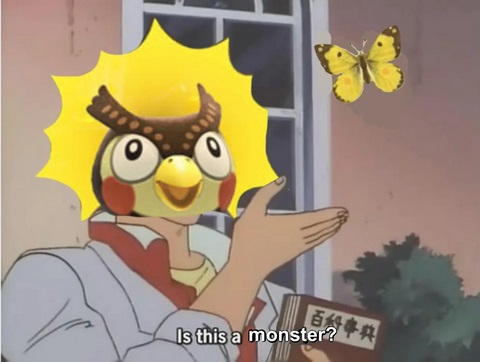
Here are the best Animal Crossing: New Horizons memes we've found ...
You won't understand this joke unless you know that Blathers the museum curator hates bugs.

4) Media have economic implications.

Ontario Premier Doug Ford was extremely unhappy with EB Games and their lack of safety precautions when they released ACNH - this caused huge lines to form in front of stores as consumers purchased the physical copy of the game. (My own family decided not to line up on the day it was released and had to wait three [long] weeks before they were able to order and receive a copy of the game.)

In-game economics are significant. Bells (and Nook Miles) are the currency and expanding connections helps you financially if you are interested in buying and selling turnips at a major profit. Players will sometimes offer their island access codes if their turnip prices are particularly lucrative, and even celebrities like Elijah Wood can come to your island to take advantage of the great offer.

This was the first place I lived on ACNH - a tent.

This was my first house, with a loan.

This is my house as of this week (May 2020)

You can earn money in different ways. My son's favourite way to earn money was to go "tarantula hunting" on other islands that you can travel to after buying Nook Mile tickets. He taught me the strategy to maximize his captures (nicknamed "No Bully Lane" (c) 2020) and if I'm patient, I can wait to sell the tarantulas (or scorpions, because tarantulas aren't in season right now) for the regular going rate plus 50%.

Me hunting on Tarantula Island

Selling my tarantulas to Timmy and Tommy

5) Media communicate values messages.

What does it mean to be a good citizen? This message is shared in so many ways in ACNH. Good citizens pick up litter, like fallen branches. They chat with their neighbours and bring them medicine when they are sick. They are active and wander the island. They donate items to the museum. They contribute to the prosperity of the island by buying and selling items from regular vendors (Timmy and Tommy, the Able Sisters) as well as visiting salespeople (CJ, Flick, Leif, Kicks, and even "shifty" characters like Redd the Fox who sells authentic and fake pieces of art). 


6) Media communicate political and social messages.

It's not just me who thinks this. The Atlantic ran an article called "Animal Crossing Isn't Escapist; It's Political" and does a convincing job of describing how it supports capitalism AND pastoralism. There are elements of consumerism but also community works.

I do not know if the gender constructs in ACNH have been examined, but they are present and fascinating. There are eight types of villagers, four male and four female. The female types are sisterly, normal, snooty and peppy. The male types are jock, smug, lazy and grumpy. There are a few characters in the past that push beyond the binary, but they aren't very popular. My daughter also informed me that the player character's gender is not fixed. This game, she tells me, is popular with trans fans because it doesn't ask if you are a boy or a girl. The pronoun used by villagers to refer to players is always the gender-neutral "they".

Speaking of popularity, there are over 300 non-player characters (NPCs) that can be your villagers. Certain villagers have become very sought-after and the reasons center on their beauty. Their personalities are limited to their type, so the only difference is their appearance. 

My current set of villagers.


7) Form and content are closely related in each medium.

ACNH is a video game, although more precisely it is a "life simulation video game". As such, it has game elements as part of daily chores and tasks. Will you catch that fish or will it get away? What fish will you catch? How might adding fish bait to the water increase your chances?

Shortly after this photo was taken, I was stung & fainted.


8) Each medium has a unique aesthetic form.

It is easy to recognize the "style" of ACNH, both visual and behavioural. When you catch something like a fish or a bug, your avatar holds it up to the camera for the player/audience to see, describing what has been caught and adding an amusing pun.

There are different clothes associated with different cultures but whatever you wear, you can tell you are in ACNH. There are different objects you can buy, learn how to craft, or can be gifted (thanks to floating presents in the sky). They can be recognized as coming from ACNH.

This is my bedroom.

This is my craft room.

This is my kitchen.

This is my living room and bathroom.

This is my upstairs entertainment suite.

In conclusion, I don't see any conclusion to my Animal Crossing New Horizons obsession / admiration in the near future. I won't be including it in my teaching (because not all elements of popular culture should or must be included into education), but I will be using ACNH avatars as a club photo in lieu of our in-person group photo. If you ever want to visit my island, contact me and let's see if we can connect - just make sure to abide by those hospitality rules that makes ACNH such a beloved pastime of mine and others. 

Monday, May 4, 2020

FOLD2020

I am writing today's blog on the day it goes live - Monday, May 4, 2020 - because I'm reflecting on an event that just happened Sunday night.

Two acronyms are suitable for beginning this post, and both begin with F.

FOMO stands for "fear of missing out" (confirmed via https://www.dictionary.com/e/acronyms/fomo/) and was what I was experiencing when I was reading the tweets from my friends.

FOLD stands for the Festival of Literary Diversity (confirmed at https://thefoldcanada.org/) and was the subject of all these tweets. This year, because of the global pandemic, the festival ran online.


Thankfully, there were still spots open for a Sunday afternoon session called "Fighting Injustice with Fiction", which was a panel featuring Kagiso Lesego Molope (@kagisobua), Adnan Khan (@whotookadnan) and Danny Ramadan (@DannySeesIt), moderated by Wayne Grady.

For some reason, I was both excited and nervous to register. I wasn't already familiar with these authors; does this mean I'm just a poser? What should I expect? What is a Zoom Meet with over 100 people going to be like?

The first thing that impressed me was the land acknowledgement before the session began.


What I really liked about it was that it included a personal action item: "we are dedicated to continuing to increase our own awareness, understanding, and conscientious action on this land". This is so important because recently a friend informed me that she heard someone comment during a different webinar, "Is this really necessary?" as the land acknowledgement was shared.

Based on advice from my friends who have attended previous FOLD sessions, I had pen and paper at the ready, as well as my cell phone so I could tweet some of the memorable insights.


The above tweet was my way of dealing with my ambivalent feelings about the performance of the moderator in this panel. The moderator was prepared; it was clear he had read the novels written by the panelists. (Sometimes it was too clear, as he revealed plot "spoilers" during the conversation!) The questions started strong, with "Why do we write novels?" but faltered afterwards. I believe the session truly became remarkable and memorable when the panelists almost ignored the moderator and began to talk amongst themselves about their experiences dealing with conferences and publishing companies.

Before you think I am being unfair to Wayne Grady, let me back-pedal a bit. There were tweets that lauded his moderating skills. This could just be a matter of opinion. Also, as I allude to in my tweet, moderating isn't easy. It's not like I felt like I could have done a better job - heck, I didn't even think I was worthy enough to even attend. This was nothing like the absolutely appalling debacle at another festival where the moderator of a panel that was supposed to be about diversity on the Young Adult fiction industry bemoaned the lack of representation for straight white boys. My concerns are nothing as serious or severe as that. It was, overall, a very good session.

There were so many great things said, especially in the later half of the panel. My notes are a mess, so instead I've copied and pasted my Twitter thread during that time, where I tried hard to capture all my favourite quotes. (If you want to read them in the order they appeared, read from the bottom up.)


Kudos should also go to Danny Ramadan, who was somehow able to tweet and retweet while still contributing fully to the panel. That is a level of multitasking that I cannot ever hope to achieve!

I enjoyed the panel and felt like I learned quite a bit. In the future, if people complain about undefined words or terms in books from different languages, I'm going to remember Adnan Khan's comparison to whaling in Moby Dick. I am also going to investigate and purchase at least one of the featured authors' books - it's been ages since I read an "adult" book (which reminds me that one day I need to write about getting "traumatized" by books).

The icing on the cake was when FOLD founder Jael Richardson hosted a Kahoot game at the end of the panel with actual prizes.


After the fifth question, I was in 11th place. That was my highest standing and I fell far behind shortly thereafter, but it was a fun and interactive way for the audience to participate.

Thank you to the FOLD organizers, the participating authors, and my persuasive friends for an excellent experience. I look forward to seeing/listening to some of the other panels from #FOLD2020 when they become public.


Monday, April 27, 2020

DigCitTO and the future of conferences

I presented at and attended a virtual conference on Saturday, April 18, 2020.
Often, when I attend conferences, I like to give a summary of what I learned and my experiences.
This will have a bit more reflection at the end.

You can see the list of speakers on their website, https://digcit.ca/

Saturday, April 18, 2020 - 9:00 a.m.

Community Welcome and Introduction to the Day

I don't know if anyone else has noticed a shift in their cicadian rhythms, but I find it difficult to wake up "early" in the morning. (This is a long-winded way of saying I slept through this part.)

Saturday, April 18, 2020 - 9:25 a.m.

Museums and Minecraft / Help! I'm new to online learning!

I think I might have been awake by this time but not actually mentally or physically ready to face the world, even when it's the world as mediated through my webcam!

Saturday, April 18, 2020 - 10:00 a.m.

Mental Health and Well-Being (panel) / Get O.E.M. Connected


By this time, I was finally ready to learn. I wanted to attend the OEM session (because I am part of the OEM team and I wanted to show support) but I couldn't get into the Zoom session. Instead, I joined the YouTube Live session. I was logged into my Gmail account that isn't associated with my YouTube channel, so I couldn't comment directly during the session so the moderator and presenter could see. Instead, I shared my comments in the Twittersphere.


There were lots of great points made during the panel about keeping an eye on your own personal mental health; Mandy advised the audience to conduct a "body scan" on ourselves because sometimes we are not aware we are holding in our stress inside our bodies. Jessica also said we should "choose our thoughts the way we choose our clothes" - that is, deliberately.

Saturday, April 18, 2020 - 10:35 a.m.

Supporting Digital Agency Through Media Literacy / Leveraging Social Media for Allyship

I was so sad that I had to miss the session on allyship but it couldn't be helped - after all, I was co-presenting! 


Quick tangent: I really want to be more like Jennifer Casa-Todd and Stephen Hurley, in that they do not yet adversity or errors prevent them from staying positive and carrying on. Jennifer occasionally forgot to unmute herself when she talked but this didn't stop her from continuing to facilitate sessions with a smile on her face. Stephen Hurley lost power in Milton as he was live-broadcasting the Zoom portion of the conference but maintained his composure, diagnosed the problem, and did what he could. I had been listening to the Mental Health and Wellness Panel through YouTube Live and I forgot to close this window when I entered the "Broadcast Booth" link for our YouTube Live link session. This caused a lot of audio feedback on my end as I heard myself twice, and it took precious minutes off our short presentation to learn of my mistake and rectify the situation. (Thank you Carlo Fusco for discovering the cause!) I continued with the presentation but internally I was beating myself up for the careless slip-up.

Big thanks to my co-presenter, Chelsea Attwell, who not only covered for me as I winced through my sound difficulties, but also stepped in and presented when my microphone conked out when I was supposed to talk - I had to exit my tab and re-enter, and Chelsea took care of things. She also ad-libbed when I realized I had taken too much air time and we needed some new voices and views.

Big thanks also go to Carol Arcus, vice-president of the AML, who was in the backchannel of the YouTube live presentation. Carol supplemented the presentation and unofficially helped moderate the comment section and did so with style.

The participants were engaged and themselves had such good insights to make that I was quite taken with their comments.

I should also thank Neil Andersen, who was the original source for the observation that the image that can be "read" from the top down or from the bottom up. Neil also provided post-conference feedback, which made me realize that I had forgotten to internalize the eighth key concept - when I had prepared the slide deck, I created it with the idea of having the images on the big screen as I presented. Instead, I was presenting on a small screen and my slides were shared alongside images of me and my moderators / co-presenters, which meant the visuals weren't seen as clearly due to their size.
This is a shame because there was an extra-important image shared with special permissions. I want to, once again, thank Brazilian artist Bruno Saggese for giving my permission to share his art as part of my presentation. Here's a short version of the story: I saw a visual tweeted by someone. I thought it was perfect to explain the Media Key Concept that media have economic implications. I wanted to use the image but I didn't just want to copy and paste it. My PLN came to my rescue; Sharla Serasanke Falodi did some internet detective work and found the name of the artist.
I found out how to contact the artist and we had a lovely conversation via Facebook Messenger. I explained that I was part of a non-profit organization, conducting a workshop for another non-profit organization and asked for three things: his permission to use the visual, his directions on how to cite it (if permission was granted) and a method of financially compensating him for the use of his art. He agreed to all three and we had an interesting conversation about artists and how things spread online.

Saturday, April 18, 2020 - 11:05 a.m.

Closing (Consolidation, Burning Questions, Next Steps)


The Menti poll was an excellent way to capture the feelings of the online attendees and thank the many people involved with transforming this conference into a virtual experience. There's a rumor going around certain parts of the Internet that I created the term "crisitunity" but I cannot take credit for it. That goes to a combination of the Chinese written language (see the above photo) and the Simpsons. 
This leads me to some further reflection. What is the future of conferences? Will they completely die out? Will there only be small venues? I'd be sad if there were no more big conferences for the foreseeable future. It's highly likely that Fan Expo Canada - my daughter's favourite place for cosplaying, panels, and pop-culture shopping from independent artists and crafters - will be cancelled. My son's favourite convention, Anime North, was cancelled. OLA SuperConference is accepting applications for their January 2021 event - but will it happen? Certain things can be replicated online but not other aspects. What might be the economic and social implications? The main reason I've seen every province except one (Saskatchewan) has been because of conferences. Conferences are great opportunities for me to learn and to meet with friends, despite the big price tag associated with going elsewhere for PD. I wish I had a crystal ball to foresee the future of conferences.

Monday, April 20, 2020

A Tribute to Kevin Sylvester

Blame this tweet. This is what started this whole train of thought. I summarize the interaction in the below tweet.
In case you can't read it, it says "Something must've gotten in my eye - just read how great Canadian author (and all-around nice guy) Kevin Sylvester has offered personal help to Danish-American Global Read Aloud founder (and super parent and educator) Pernille Ripp to inspire her child. When I despair about the world, I shall not.

The more I thought about Kevin Sylvester, the more examples popped in my head about how he has gone out of his way to make people feel valued, the way he has leveraged his clout as an author, illustrator, and broadcaster to support those who need lifting up. So, at the risk of embarrassing him tremendously, I wanted to write a little bit about how Kevin Sylvester has made a difference to me and those dear to me. Now, usually when I write about someone publicly online, I notify them in advance - I need to respect their privacy. It's not like Kevin and I are "besties"; so I contacted him and checked with him. His response? Go ahead (and he even turned down the offer to see the post prior to publication). Thank you Kevin; I hope this won't be too awkward, but this is the "This is Kevin Sylvester through the eyes of Diana Maliszewski" version of a retrospective.

2005

With a fan at the Forest of Reading launch
I'm not sure about the first time I precisely met Kevin Sylvester, but the first piece of photo evidence I have comes from 2005. The Ontario Library Association was experimenting with Launch Parties for the Forest of Reading program and on October 18, 2005, I was allowed to attend an event with a few of my students. Kevin was nominated for a Silver Birch Non-Fiction award for his book, Sports Hall of Weird. What impressed me about him at the time was how personable he was and the rapport he had with his fellow authors and illustrators. (Please excuse the quality of the photos - this was 15 years ago and these are scans from my scrapbook.)


The group of nominees for FoR 2006

2006

I was so impressed with Kevin Sylvester that I invited him to give a presentation at what eventually became an annual local Silver Birch celebration. Kevin captivated the students. He was entertaining. They enjoyed his talk and his books.


2007

Kevin won't remember this, but my very first "media appearance" was as a guest of his on CBC Radio - Metro Morning. I was asked to come to talk about the elementary school library funding initiative by the provincial government. Speaking live on radio was super-scary but Kevin made it almost fun. I compared the attention that school libraries were receiving to being asked to dance by the popular kid at prom, and Kevin Sylvester made that comment sound much more witty than it was. (He made a comment about the image of Dalton McGuinty dancing in his head.) This was not the first time Kevin Sylvester helped me overcome a challenge.

2009

I have no clue how often Kevin Sylvester has been nominated for a Forest of Reading award. I suspect that it's a lot. Kevin is such a big booster of the Ontario Library Association and the Forest of Reading program. This is just a recent tweet he shared extolling its virtues.


He has a dynamic stage presence when he is at what used to be called the Festival of Trees and is now known as the Forest of Reading Festival. This is a photo I took of him addressing the crowd of enthusiastic readers in 2009.


2011 

I continued to see Kevin at various Forest of Reading events and he continued to delight his fans with his writing and his appearances. (I love the Neil Flambe series, although I like to pretend that the plot that Neil comes from a long line of chefs that fail due to a curse isn't really part of the Flambe canon.)

Later that year, I had my first opportunity to interact with Kevin on a level deeper than just as a teacher-librarian and author. I was asked to be on a panel for the Book and Periodical Council, with Patsy Aldana and Annie Kidder. Patsy Aldana is the founder of Groundwood Books, the past president of the National Reading Campaign, and the International Board of Books for Young People (IBBY). Annie Kidder is an actress and the founder and executive director of People For Education. I am ... a teacher-librarian - and I was terrified! I felt like I was totally out of my league. How could I even attempt to sound as poised and knowledgeable as Patsy and Annie? Kevin Sylvester was the moderator of the panel and he was so incredibly reassuring. He did a wonderful job facilitating the conversation and made me feel like I belonged and wasn't an imposter.


2012

I knew that Kevin was nice to "library people" and "education people". An incident that occurred during the 2012 Ontario Library Association cemented my opinion that Kevin was also nice to "young people" and that it wasn't just a persona he adopted when on stage. I brought students to the conference for a special project. When Kevin encountered them in the hallway, the students and Kevin started talking. Before I realized what was happening, Kevin Sylvester was down on the floor, sitting with the kids, giving an impromptu drawing lesson.


2013

Could I like Kevin Sylvester even more than I already did? Yes. In 2013, one of my students was chosen to write and present a short speech introducing Kevin onstage at the Forest of Reading Festival. Hamrish was so excited to write and present this speech. (I can use Hamrish's name and image here because he signed a media release form that permits it.)

Kevin Sylvester made Hamrish feel like he was the most important person at the festival. He praised his speech publicly on stage and later via social media. Hamrish was walking on Cloud 9 all day. I wrote a little bit about that encounter on my blog back in 2013.


2015

This is another example of a "I-saw-Kevin-at-the-festival-and-he-put-a-smile-on-my-face" moment.

MCing the Red Maple Awards, 2015
2017

I mentioned earlier about some local Forest of Reading events that we undertake: the Silver Birch Quiz Bowl and the Red Maple Marketing Campaign. Kevin uses his social media presence to celebrate and encourage others. I tweeted out the various projects related to each of the books and tagged the authors. Every single author mentioned, including Kevin, tweeted back.

2019

Last year, I saw Kevin at two separate events: the OLA Forest of Reading Festival and at Fan Expo Canada. What floored me was how Kevin was so incredibly supportive of the education workers. He spoke openly of his support for what the unions were trying to accomplish and chided the government for their mixed-up priorities. Kevin isn't a teacher and his support meant so much to me, especially because it ended up being a very long, drawn-out battle that only just ended in March 2020. Kevin can be political but he can also be playful, and consented to a few goofy photos backstage with some of my students. (Once again, because they signed media release forms, I'm allowed to show their faces here.)


At Fan Expo Canada I admired how Kevin, who probably knows a gazillion-million people, managed to recognize people and greet them like old friends. I was dressed like Recovery Girl from the manga/anime My Hero Academia, but Kevin still acknowledged me warmly.


2020

This is the cherry on top of the Kevin Sylvester tribute sundae. He's talented, friendly, personable, entertaining, knowledgeable, versatile, articulate, funny, and supportive. He is also so empathetic that it startles and overwhelms me. There's the example of Kevin reaching out to Pernille to help her daughter, but I have a personal example too. I tweeted recently about my decision to stop making social media posts about my daily experience during the pandemic. As part of the Twitter thread, I mentioned my realization that this drive to document everything stemmed from my mother's dementia. Kevin Sylvester sent me a DM (direct message) with words of comfort and support. It wasn't that long ago that Kevin's mother passed away, yet he made a point of reaching out to me.

So, thank you Kevin Sylvester for being who you are, through and through.

Monday, April 13, 2020

This Is Your Life

Back in the 1950s, there used to be a show called "This Is Your Life". The concept behind the show was to "surprise guests and then take them through a retrospective of their lives in front of an audience, including appearances by colleagues, friends, and family." This was meant to cheer up soldiers who were in recovery after the Second World War. I was not old enough to watch this series, but I heard about it and the various parodies and spoofs that it inspired.

Well, I'm having a This-Is-Your-Life-like series of moments lately, partly due to this pandemic and limiting my socializing to online and/or distant interactions.

My Senior Prom Date

I had followed Sarah Wheatley on Twitter for a long time. In fact (after reviewing my Twitter history), we were part of a mini-PLN that investigated the use of Tumblr - back in 2014! I never really thought long or hard about her last name until we were chatting after participating in the first ChoirChoirChoir! virtual sing-a-long. That last name seemed awfully familiar ... and after mixing her up with another Sarah, who is also a teacher-librarian, from British Columbia, I figured out the connection. Sarah's husband, Sean, was my date for senior prom!

Not only is Sarah's husband an old childhood friend, he works at a location within walking distance from my house! This has been an utterly delightful discovery. After this social distancing is over, Sarah and I look forward to getting together in person so Sean and I can meet after 30 years!

My Flower Girl

Emergency response remote learning started on Monday, April 6 for many of us in Ontario. (Taking Tim King's lead, I don't call it e-learning for many reasons.) In the attempt to still mark days of significance, many educators wore pink for the International Day of Pink on Wednesday, April 8. One such educator posted her photo on Twitter and I recognized her immediately. She was the flower girl at my wedding! Compare the two photos and you can see Concetta is still the same sweet person!


A number of years ago, I heard from a former student who remembered me from when I was a student-teacher (!) at my very first Faculty of Education placement (!!) in the Dufferin-Peel Catholic District School Board. What a pleasant shock that was. I was amazed at what she remembered about the 1994-95 school year when she was in Grade 5. Amanda, you totally made my week back then with your message.

I also heard from Mackenzie, a former student at my current school, in 2017, several years after she graduated. I'm still in regular contact with former students Andrew Li and Diana Si, for which I am grateful. Other alumni have visited the school too, to my delight. (In fact, one couple did their engagement photo shoot at the elementary school, because that's where they met!)

This led me to contemplate who I'd love to hear from, even just briefly. I'd love to be able to tell some of those teachers I had how much I appreciated their support back when I was younger and less self-assured. That would include Mr. Sturm, my Grade 12 and OAC English teacher at Birchmount Park C.I. and Don and Pauli Quinlan, who trusted me enough to babysit their children.  I'd love to hear from the students I had from my very first permanent teaching jobs, to discover how they grew and changed but stayed the same.

One of my stay-at-home projects that I do when I am not working-from-home is meant to spread that This-Is-Your-Life / what-is-your-impact vibe. My sister and I are hand-writing letters to all our maternal first cousins to tell them about our favourite memories of them and what we appreciate about them. This has been a fascinating project to undertake. My memory can be Swiss-cheesy (aka full of holes) and it was interesting to compare notes with my sister about what she recalls vs what I remember. Thank goodness for photos to jog the old synapses.

What impact do you have on others? Most of these connections have been positive ones. I pray that I have not left sour impressions with anyone (or at least, if I accidentally did, that they were able to rise above the negative interaction and still have a good life). I wonder how this pandemic and time of social distancing, school closures and interrupted regular schooling with affect the memories of today's teachers and students. I need to have a meeting with my team and my administrator to decide what we are going to do about the school yearbook. Do we proceed or shelve? Should we preserve this year because it so unique, despite the unhappy memories it might invoke? We'll see.


Monday, April 6, 2020

Scrapbooks, Face masks, and A Guide to Documenting Learning


I finally did it. I finished reading A Guide to Documenting Learning: Making Things Visible, Meaningful, Shareable, and Amplified by Silvia Rosenthal Tolisano and Janet A. Hale. I vowed to start it in October 2018 and made it through Chapter One that same month, but stalled a bit. I chose to make this book one of my key resources for my Kindergarten Additional Qualification course's Independent Learning Project and that forced me to read it all. It took about a month and during both  periods, I tweeted my progress. I actually turned some of these tweet threads into JPGs using my Snip tool because of something Tolisano and Hale said. (I'll get to that in a bit.)

Last week, I mentioned that my mind was abuzz with comparisons between A Guide to Documenting Learning and scrapbooking. So then I pondered - what would be the best way to organize this post that would make my learning meaningful to others? Arrange my reflections by chapter? By themes or ahas? (Or as it says in the infographic on page 11, "How can my thinking be best captured, articulated, and conveyed?") I'll play around a bit and see what I decide.

Chapters 1-2

Overview / Main Idea 
  • documenting OF / FOR / AS learning, explaining differences
  • 4 aspects (visible, meaningful, shareable, amplified) 
  • 8 thinking moves (pages 16-17)
  • NOW literacies (basic, media, digital citizenship [10 characteristics], global [9 characteristics], information [4 abilities, 9 characteristics], network) 
Favourite Quotes or Thoughts
  • "the act of documenting aids in the learning itself" (page 16) = so true for me with blogging; how can I make it so for students?
  • "How could I make learning and thinking visible? How can I capture a potential absence in learning?" (and other good questions, page 29)
Concepts or Portions I Struggled With
  • photographs on their own do not provide actual evidence of learning (page 17) = ouch!
Thinking Shared over Social Media


Chapters 3-4

Overview / Main Idea
  • difference between pedagogical documentation and heutagogical documentation
  • heutagogical = self-directed, motivation due to autonomy, mastery and purpose (urging, desiring, yearning)
  • difference between display and document (and ways to turn it from display into documenting artifact) 
  • primary vs secondary learner
  • 4 documenting learning layers focused on primary learner
Favourite Quotes or Thoughts
  • word curator (page 49) made me think of Lisa Noble
  • word transmedia documentation (page 51) made me think of Alanna King
Concepts or Portions I Struggled With
  • "it is important that teachers as professional learners have safe-place opportunities to ponder and grow in their understanding of what evidence of learning looks and feels like when engaged in the documenting process" (page 59) = yes, agreed, but if it's more powerful when shared and amplified, where do you carve out the safe spaces?
  • (see tweet) the text heavy tables used to describe these layers made it too dense to easily digest

Thinking Shared over Social Media


Chapters 5-6

Overview / Main Idea
  • sharing vs amplifying
  • degrees of amplification (in your head / write or draw / share with people F2F / share strategically online / share globally online)
  • documentation phases (pre, during, post) 
  • choosing applications for platforms and media (pages 92-93)
  • 9 steps in post-documentation phase (unpack, filter-select, organize, reflect, connect, edit, create, share, amplify)
Favourite Quotes or Thoughts
  • "When sharing takes place with a purposeful extending the reach to an ever-widening audience, amplification increases" (page 74) = I discovered this when I first started posting my blog link to Twitter and to Facebook. I also saw it when Doug Peterson decides to share my blog on his blog review and the Doug/Stephen radio show, TWIOE.
  • "How will you recognize learning when it is happening in real time?" (page 89) = sometimes great things can be happening right under our noses and we are too busy or distracted to see
  • "Documenting OF learning turns into documenting FOR or AS learning when the learners do something with or to the artifacts captured in the during-document phase." (page 101) = I forgot to include this in my AQ ILP paper
  • "How does a series of artifacts demonstrate my learning growth over time?" (page 105) = one of my favourite questions
Concepts or Portions I Struggled with
  • Teacher-candidates seems to be discouraged from sharing online (see my student-teacher reflection from February 2020) so how do we make them less scared when there's so much evidence of the benefits? Also, "How will you remind yourself to look and capture learning as you are teaching, facilitating, and multitasking in the during-documentation phase?" (page 90) = my TC found this hard to do and sometimes I do as well (I compensate by scribbling cryptic notes on the board or grabbing my cell phone)
  • sharing thinking globally is beneficial for "becoming aware and acknowledging your own cultural bias regarding learning and teaching" (page 79) = this is hard especially when bridging culture/language divides. Alanna King has done this well with her friendship with Walquieria Salinas but how might I?
  • "the act of transforming artifacts cannot be outsourced" (page 102) = hooray and dang! That's where the rich thinking happens but I need to be patient with how long it takes 
Thinking Shared over Social Media

Interlude - Connection to Scrapbooking

A project I was initially going to undertake was to revise all of my parents' photo albums. They had their collection in albums of all shapes and sizes, with storage that ranged from safe to damaging for the photographs contained inside. My brother had the idea of choosing special albums that looked the same on the outside and could replace the encyclopedias we've had in my parents house from the 1980s. (Even though they never use these encyclopedias anymore and the information is woefully out of date, my father is reluctant to part with them. I think he likes the look of them on the shelf, and it's a tangible reminder of how he spent good money to supplement and support the education of his children.) I was willing to tackle this huge project, but I had some questions: how would I organize these photos? What categories would I use? To help my parents (one of whom has severe memory loss due to dementia), I thought I would annotate the photos, labeling them with helpful captions explaining who was who, and when this was taken, and why this was an important photo.

Two things stopped me. One was the thought of dismantling the oldest photo albums, some of which hold images older than my parents. The albums themselves deserved to be preserved (and to be honest, they kept the photos in better condition than the photographs from the albums from the 1970s, 1980s and 1990s). Who was I to destroy it? I decided, even though it would be costly, that I would scan and replicate key photos and place them in themed albums, such as "weddings".

The second thing that stopped me was my brother's insistence that all original photos be used and none be tossed aside. I took a photo of the collection of albums, and as you can see, my over-exuberance in taking copious quantities of photos meant that the grandchildren are over-represented. (In my defense, this was partly during the days of developing film, so I'd order 3 sets of copies; one for us, one for my parents and one for my husband's parents. Thank goodness we only had two kids!)

The documenting would be pointless if I had to include every image, including blurred shots and multiple angles of the same moment. I have to try and forgive him; he's not a scrapbooker. People who scrapbook search for the right image for the message they are trying to convey or the moment they are trying to conserve. It connects well to ideas in Tolisano and Hale's book. What's the most meaningful photo? What's the purpose of preserving and sharing this memory? If there isn't some sort of documentation (like a caption, or date, or remark) attached, then how will the photo do the job of preserving a moment in time that lasts longer than the people seen in the photo, or their memories of the event? This is even more important when you realize that it isn't just you looking at a scrapbook; others will need context or explanation for the photo to be meaningful and shareable. (So much of my actions lately have to do with preserving memories, and I realize that it is my reaction to what I called "that demon Dementia" in a recent Twitter rant.)

Chapters 7-8

Overview / Main Idea

  • 5 learning-flow routine steps (look, capture, reflect, share, amplify)
  • difference between schoolware and worldware (page 123) = for me, Minecraft is worldware turned into schoolware, and that move made me sad
  • various text and visual platforms and tools (e.g. text and backchannel documentation [Twitter, Today's Meet, Google Docs], image and photograph documentation [6 strategies: annotexting, screenshooting, sketchnoting, comic strips, infographics-visual quote cards, collages])

Favourite Quotes or Thoughts

  • "To ensure that a physical or mental action becomes routine, it must first become a habit" (page 111) = I wrote in the margins, "ain't that the truth!"
  • (see tweet) "orbit of ability"
  • (page 116) list of 5 questions to go deeper as introspective learners = it's like the second phase of pedagogical documentation, interpretation
  • Everything from pages 133-144 was game-changing for me! It fit my AQ ILP like a glove and gave me concrete ways to improve my own documentation practices (since photo-taking was already an established habit for me)

Concepts or Portions I Struggled with

  • delegate and assign tasks to collaborators (e.g. photographer, videographer, microblogger, backchanneler) to multi-capture the evidence of learning (page 115) = kindergarten teacher Diana Lung does this well; she trusted her students to film the "egg drop" experiments in her class (that I was lucky to get to see). I need to trust my students more, that they will capture it - during the egg drop, I caught myself worrying that the students weren't getting the right angle or not pressing "record" soon enough, but this didn't seem to bother Ms. Lung.

Thinking Shared over Social Media


Chapters 9-10

Overview / Main Idea

  • Audio documentation and video documentation (ideas include video scavenger hunts, notecard confession videos, bite-size learning, interviews, documentaries, screencasting, metacognition mission, tutorials)
  • Blogging and hyperlinked writing (isolation, information, illustration, curation, connection)
  • Unpacking blog posts, Twitter feeds, conference hashtag feeds, backchannels, infographics, sketchnotes

Favourite Quotes or Thoughts

  • "application of two higher-level thinking skills-based purpose and intended message: removing ... remixing" (page 148) = it IS a lot more complex than it seems
  • "visible thinking routine to consider when filming ... I see, I think, I wonder" (page 153) = love this, and saw it as a recommendation for growing critical thinking skills in students and as pedagogical documentation protocol
  • "tweets rarely stand on their own" (page 178) = this is why I took Snip JPGs of some of the Twitter threads, because if I just embed it, readers miss the back and forth in a Twitter conversation

Concepts or Portions I Struggled with

  • "Blogs allow learners to tag and categorize posts based on content" (page 164) = although there's lots of good things I do (e.g. my Forest of Reading non-fiction chats use questions like "what did you already know that was in the book?" "what was brand-new information to you that was in the book?" [page 154] or the linktribution that shows connection and evidence of my learning over time when I link to my old blog posts [page 169] but the one thing I never do is create tags or categories. I need to change that but I'm lazy because I have 10 years of blogs to do and when I do a search using Blogger, I can usually find what I want.
  • "tasked with unpacking the transcript to create an artifact" (page 183) = I"m kicking myself because my principal asked me after the Google Meet was done to see a copy of the backchannel, which I was moderating. I didn't save it, but if we had, it would have been an excellent artifact for seeing who was in attendance, the questions people still had, the understanding of the main messages, and more. Dang! I also realize that I don't unpack nearly enough as I could; it seems like I do it best when I go to conferences, 

Thinking Shared over Social Media


Chapters 11, 12, 13

Overview / Main Idea

  • Sample of the 5 learning flow steps in action
  • Encourage reader to provide an authentic opportunity to document learning focus and goals through now literacies, learning flow, and pre-, during-, and post-documentation
  • Branding as institutional memory, brand is image, promise, result
  • 5 strategic considerations in using documentation for branding
  • 6 strategies for establishing/expanding an educational brand-identity: memes, challenges, selfies/USies, throwbacks, crowdsourcing, visual quotes (amplification degrees include emotional reaction, re-disseminating content, leaving comment, creating artifacts/sharing perspective)

Favourite Quotes or Thoughts

  • "What do you think would be the best media selections to aid you in providing evidence of your learning...?" (page 201) = leads to thoughtful use of choices
  • (pages 212-213) I do the "What I Really Do" meme activity with my Part 2 & 3 Librarianship AQ candidates and it is very powerful, and my school did a challenge for our STEAM night
  • "What do we cut? What do we keep? What do we create?" (page 224) = great steps, like Stop Start Continue

Concepts or Portions I Struggled with

  • book bucket challenge (page 213) = what's that? I need to investigate

Thinking Shared over Social Media

Interlude - Connection to Face Masks

I need projects to keep me busy while we are safe/stuck at home and I decided that I wanted to sew some face masks. There are tons and tons of patterns and designs online. I also thought that this would be a good way to make my learning visible (including the mis-steps), meaningful (with a concrete goal of creating face masks), shareable (through my social media) and amplified (by crowdsourcing for help). I searched around and found a picture step-by-step tutorial. The creator merely asked that when using their pattern to cite the hashtag #buttoncountermask, so I did.


Here's the absolutely incredible part. I actually had to start writing down a list because of the huge outpouring from my contacts. The response was wonderful and I do not want to take anyone's contribution for granted. Apologies for the big list but I thought it'd be a way to appreciate those who reached out by mentioning names and types of assistance. (I've categorized it in terms of how it was [a like, a RT, a reply] and what it was [advice or encouragement].) This list is in no particular order.

Sarah Wheatley @ksarahwheatley = reply, ENC
Roland Acheampong @OriginalRoland = like, reply, ENC
Margie Keats @ms_keats = like, reply, DM, ADV
Nadine Osborne @nadine1osborne = like, reply, ENC, ADV
Kate Johnson-McGregor @TL_Kate = like
Candy Hoang @ms_candy_hoang = like, reply (with photo/link), ENC, ADV
Beth Lyons @mrslyonslibrary = like, reply (with photos/link), ENC, ADV
Nancy Clow @NancyClow = reply, like, ENC ADV
Barbara Zielonka @bar_zie = like, reply, ENC
? @BramaleaDD = like, reply, RT, ENC
Melissa Bogaert @bogiemomof2 = reply, like, ENC
Lisa Noble @nobleknits2 = like, reply ENC ADV
Ab Velasco @ab81 = reply, ENC
Lisa Corbett @LisaCorbett0261 = reply, ADV
Martha Martin @ = reply, ENC
Pam Taylor @tayloredinquiry = like, reply, (with photo), like ENC
Rachel Harnett @HarnettRachel = like, reply (with video) ADV
Moyah Walker = reply (with video) ADV ENC (via text message)
Lisa Sarbadhikar @LLSarbadhikari = like
Janis Castle Jones @jjecx = like
Timothy Molina @TimothyCMolina = like
Zoe Branigan-Pipe @zbpipe = like
Andrew Li @harakichat = like
SR Lu @mslutdsb = like
Sara Furnival @sarafurnival = like
Patti Walker @pattimarathon = like
Rabia Khokhar @Rabia_Khokhar1 = like
Rebecca Chahine @MrsChahine = like
Mark Zochowski @MarkZochowski = like
Wendee Mullikin @MullikinWendee = like
Carlo Fusco @mrfusco = like
Ashley Clarke @Ms_Clarke7 = like
Diana Hale @dianahalezoux = like
Adrienne Britten @MsBritten1 = like
Rita Gill @rgill_tdsb = like
Tina Zita @tina_zita = like
? @oconnorLLC_tdsb = like
Natasha Khakoo @mskhakoo = like
Christine Booker @CABooker22 = like
Gail deVos @woden7 = like
Ruth Dawson @Ruth_Daws = like
Kim Davidson @KDavidson_TDSB = DM (with video, link) ENC, ADV


I thought I'd also give a try and annotext a few of my tweets to show how I tried to maximize the sharing.


This was so much more rich and deep a learning experience than just Googling ways to make a face mask. The contributors (42 people!) come from all over Canada and the US. I have so many options now and people cheering me on. I can't disappoint them by giving up on making face masks (even if I use two rubber bands and a scarf like some videos recommended!). Thank you EVERYONE (especially Silvia Tolisano and Janet Hale) for helping me learn and helping me show that learning.