Monday, April 24, 2023

Gotta Catch 'Em All!

 There are too many things to write about this week! The previous week was full of fantastic teaching and learning opportunities. Remind me if I lack a topic to mention to come back to one of these:

  • my fun kindergarten co-teaching lessons with a master educator (yes Steve, I stand by my words)
  • setting up students for success in dance (and conversely, dance anxiety)
  • my latest STEAM challenge center for the intermediate students (Ozobots)
  • my experiences leading Ukulele Club
  • the thrill (not exaggerating or being sarcastic) of helping AQ candidates and Grade 7s create engaging inquiry questions
Today I want to reflect a bit on my recent Media lessons with my primary division students. Last term, we focused on algorithms. I presented on this topic at the Global Media Education Summit and I will be sharing it again at TDSB's Unleashing Learning conference this week. (See last week's blog for the ad.) For this term, I decided on a more student-centered topic: Pokémon. This may sound like a "fluff" lesson, but there are so many engaging and intriguing parts to this unit that I'm doing or have planned that even my own grown children are excited about helping out.

We began with individual KWL charts as well as a group brainstorm to establish student prior knowledge of Pokémon. Our guiding inquiry question came from a Grade 2 girl who asked, "Why is Pokémon so popular?" Many students will declare to anyone who will listen that they are absolute Pokémon experts, but like the digital native / digital immigrant myth, young people of a certain age do not know it all about this juggernaut brand. We read a non-fiction book about the history of Pokémon and then examined the codes and conventions of just one example of Pokémon merchandise - the Pokémon cards.

The students, even those who weren't interested or into Pokémon prior to this unit, easily spend lots of time pouring over these cards. We've learned about the icons that denote the types of Pokémon and we've examined the clever ways that Pokémon names are constructed. They compare the cards. They sort the cards. They like to claim they can tell which cards are "fake". (The joke is on them - all of the cards I'm using are real, but because they are from older generations, back when my own young adult offspring were young collectors, the card design looks slightly different.) Some of them have even tried to steal the cards. (We'll need to talk more about how and why some schools used to ban Pokémon cards from the classrooms and playgrounds.) Here are some photos of the students (no faces shown) eagerly exploring these beloved media texts.


The next steps in my Pokémon unit are:

1) to have students design their own unique Pokémon card, using what they've learned about naming techniques, layout, and required elements. (My own children have volunteered to make samples on chart paper for the students to use as models.)

2) to watch a few of the Pokémon anime TV shows and analyze them.

3) to play a few of the Pokémon video games - especially from different eras like the Switch, 3DS, and other Nintendo systems. (Again, my own children have volunteered to come in to lead those sessions.)

4) to play the Pokémon RPG with them and examine what parts appeal to what personality types.

5) possibly to have some parents in the community (whose children told me play Pokémon Go) take small groups out to go hunting for Pokémon locally.

6) eventually to summarize why Pokémon appeals to such a large demographic of people.

This is what I've written in my long range plans (and with the relevant curriculum expectations):

April = Pokémon cards (math and language connections)

May = Pokémon RPGs and Pokémon Go (social and physical)

June = Pokémon manga and anime (narratives)

Ministry of Education Curriculum Expectations

TERM 2

= Strand: Media Literacy

·         1.2 – Overt & Implied Messages

·         1.3 – Responding to and Evaluating Texts (+1.4 Audience Responses)

·         2.2 – Conventions and Techniques

·         3.4 – Producing Media Texts

It'll be fun to see what the students produce with their cards and their reactions to the RPG (especially compared to our 2020-21 experience when my daughter ran a RPG for my then-Grade 5 and Grade 6 students online).

Monday, April 17, 2023

The Pull Between Plan, Teach, and Assess

 This is another short blog post, composed just before my self-imposed deadline.

Teaching is made up of many things. There are lots of other things battling for one's attention, but at the core of teaching are three pieces: planning, teaching, and assessing.

All three parts take a tremendous amount of energy. The teaching portion is limited by the amount of time in the instructional day for traditional schooling. In an elementary school setting, that's about 6 hours a day. It takes a great deal of time to plan and a great deal of time to assess. The end result doesn't always demonstrate the time it took beforehand. The 40-minute (or 10-minute) lesson can take hours to prepare. The 20-minute talk looks effortless but involved lots of deliberation and consideration. The comment to an assignment is just one of many (62 for a certain category) to contemplate, compose, edit, post, and document. What gets the priority? Really, all three need to happen and in a timely fashion. This weekend, I spent a lot of my time in front of my computer doing some of this. I'm getting better at (or maybe my spouse is getting better at encouraging me to) taking short breaks to clear my head and spend time with the family doing fun things (like watching My Hero Academia or getting Krispy Kreme donuts). I did a lot of assessment, which previous blog posts like this one show can be challenging for me. I feel good that I got a significant portion of it done - but like cleaning, planning and marking never really end.

As for planning, there are big plans coming up: Unleashing Learning, another GTA Resource Fair, the Forest of Reading voting day, Heritage Fair, the Festival of Reading, yearbook, Quiz Bowl, Red Maple Marketing, and of course the regular running of the AQs and day-to-day teaching. As a preview, here's a promotion card about my contribution to #tdsbUL23. 


Monday, April 10, 2023

Let the Hunt Begin!

 I am composing this post with less than two hours before the end of Easter Monday. I haven't spent a lot of time writing because I've been focused on my upcoming AQ courses I'm teaching and a few family errands and events. My sister came from Calgary for the Easter weekend and we've enjoyed her company. Here's a photo of my parents with us over for Easter Sunday dinner.


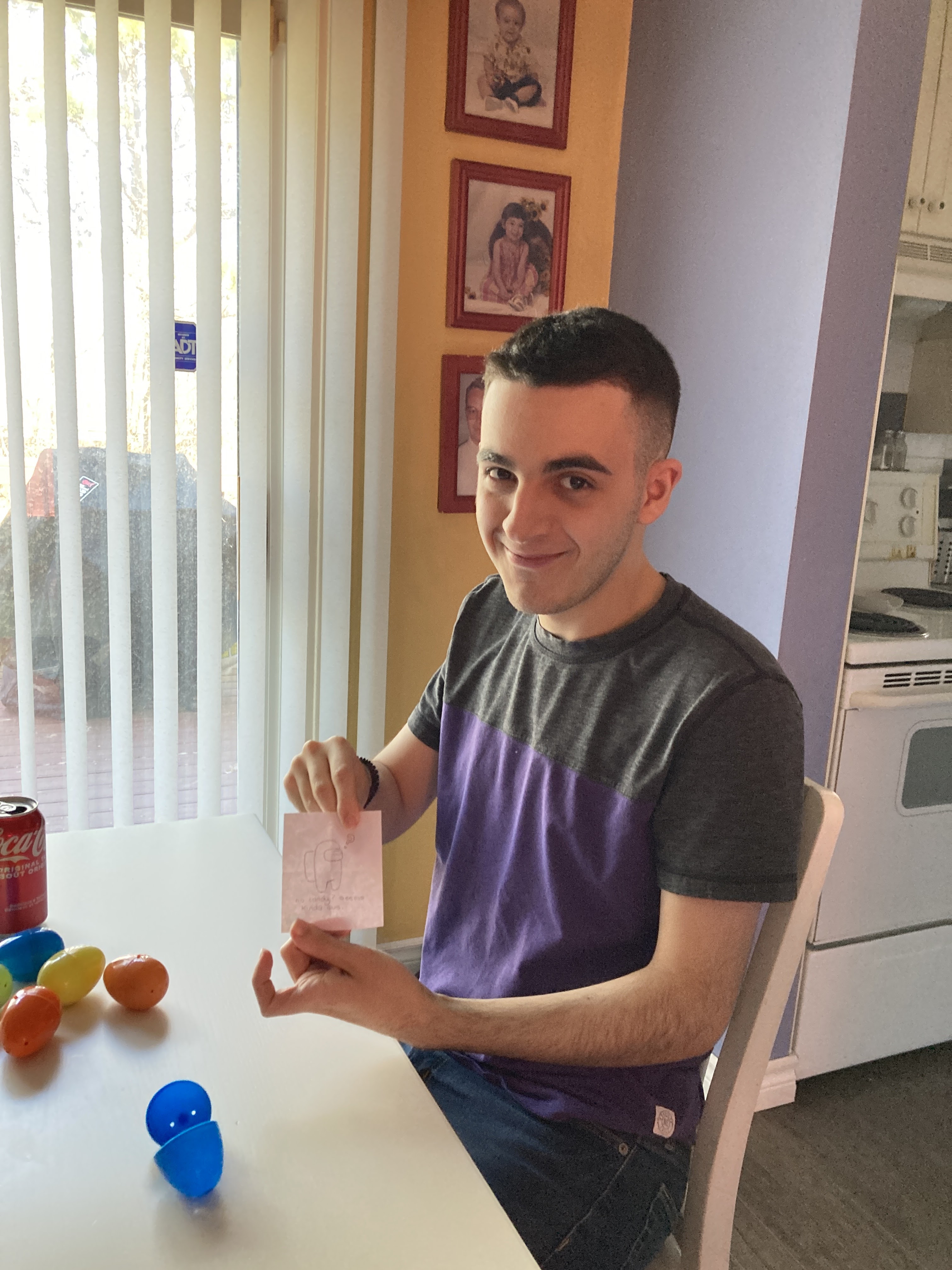
As we tried to plan activities, my son casually mentioned that he missed when we used to hunt for Easter eggs like when he was a child. So, we decided to have an indoor Easter egg hunt. We filled eggs with money, chocolate, or meme-ish prank notes for everyone to find. Guess what? Hunting for eggs as an adult is just as much fun as hunting as a kid. I played the role of the Easter bunny. (Sorry Doug Peterson, I only managed a pair of rabbit ears for my costume this year!)


Our school's Student Council arranged their own Egg scavenger hunt last week. I've written about this year's Student Council before on this blog. I admire how Ms. Daley and Ms. Tran, their staff supervisors, really allow the student council autonomy and agency in deciding what and how they want to do. Although finding eggs was the theme, it was not tied to any religious or holiday observances. The students did an amazing job tailoring their hunts to the specific classes. Older classes had to solve riddles, math problems, and other brainteasers to locate their clues. In a brilliant planning move, the class hunts led to finding tickets, which could be exchanged for chocolate treats during periods 4 and 8. This way, no one took more than their share and no one accidentally seized treats meant for other classes. 


The rest of the school year will fly by, I am sure. I am grateful for the four-day weekend and the opportunity to catch my breath a bit. Sure, I could have done so much more with the time - but *shrugs* I decide what is best for me to do.


Monday, April 3, 2023

Playful History

 One of the things I love about co-teaching as part of my library assignment is getting the opportunity to really focus on making a few really excellent lessons on a topic. Right now, I'm lucky enough to work with Lisa Daley on a Grade 7 history unit. Our end goal is to have the students create inquiry projects, some of which will be entered in the TDSB Heritage Fair. There is a lot of content we need to expose the students to, so that they have enough foundational information to formulate the question that will guide their research. 

When Lisa and I were collaboratively planning this learning experience, she revealed that history was not her favourite subject to teach. I understand. History can be dry and boring. Lisa described approaches, such as reading historical fiction, that got her more engaged in the subject. That inspired me to ensure that the lessons I provided would be interesting and fun. We've divided the class in half and split some of the content between us to cover in the next few weeks.

My first lesson focused on this expectation:

A3.4 describe some significant aspects of daily life among different groups living in Canada during this period

We used a Jigsaw strategy and the consolidation portion of the task was a specialized version of the classic board game Guess Who. Instead of using clues solely based on physical appearance, the students used information gleaned from their information gathering on different groups that existed in the area we now call Canada from 1713-1800.


The second lesson will focus on this expectation:

A3.5 describe significant interactions between various individuals, groups, and institutions in Canada during this period

I pulled from a couple of other popular media texts (movies and anime/manga) to help illustrate the task I want them to do. My goal is to make it easy to comprehend and relatively fun to complete.

I'm not the only one trying to have fun with history lately. Even though Twitter is no longer a significant communication tool for me, I noticed a trend - having AI art programs reimagine Canadian prime ministers in various clothing styles. Here are a few ...

Canadian and American leaders as gladiators:


Canadian prime minister as 1970s era hockey players Canadian prime ministers as 1980s metal band rock stars Canadian premiers as 80s hair metal band members

Thank you Craig Baird for making Canadian history fun and funny! 

Monday, March 27, 2023

Let's Talk - The Library is Somewhat Safe for Now

Today's blog post is an attempt to cover two topics in a single text.

First, I want to talk ... about talking. Specifically, I want to examine the Forest of Reading talks I hold in the library learning commons. 

One of the main ways the adults at my school determine whether or not a student has read a Forest of Reading nominated book is to talk with him/her/them. These Forest of Reading chats have been a staple of the program at Agnes Macphail Public School for years. It was way back in 2014 when I wrote an article for ETFO Voice magazine describing the process. Here's a quote from that article about the types of conversations:

Students who have completed reading a book check the spreadsheet and then take the initiative to coordinate a time with one of the teachers who have read the book to have a chat at a mutually agreed-upon time. The chat is a conversation, not a test, where two readers share their thoughts and opinions on a text. If the teacher believes, based on the “accountable talk” they’ve had, that the student has read the whole book and understood it, s/he will sign the passport to validate the student claim. Students love the opportunity to talk with their teachers about books in a way that supersedes evaluation and in recent years, we’ve expanded chats to include group talks and conversations via Skype and/or email.

The pandemic, as you can imagine, disrupted this process in several ways. I wrote for Treasure Mountain Canada 7 (the Canadian school library think tank symposium) about how we tried to adapt our Forest of Reading program with COVID restrictions and the results from those alterations.

Now that we are back to in-person learning without interruptions or pivots, we are re-establishing our Forest of Reading habits.

But finding time to talk can be hard!

I had this statistic from my 2021-22 Library Annual Report:

# of chats conducted by Teacher-Librarian for Forest of Reading

For 2022 = 105 (compared to 166 in 2020 and 202 in 2019) 

So far, I've had 125 chats in 2023, with 5 more weeks to go until the end of this year's Forest of Reading program. (I'm lower than I'd like to be because of some personal absences from school, such as for the MES Conference and the EOEC trip.) It was very hard to arrange chats last year because I didn't host recess open visits last year. These are the statistics from my recess open visits from the past:

Library Recess Visit Log & Statistics

2016 – 2017

(Feb. – Jun.) 5 mos

2017 – 2018

(Sept. – Jun.) 10 m

2018 – 2019

(Sept. – Jun.) 10 m

2019 – 2020

(Sept. – Jan.) 5 mos

2020-2021

(Sept.-Jun)

10 m

2021-22

(Sept.-Jun.)

0 m

574 visits

3080 visits

2920 visits

1284 visits

0 visits

0 visits

(Can you tell how much I love data? I like the story that numbers can tell.) This year, I've been able to re-open the library, just at morning recess instead of both morning and afternoon. So far, I think I'm at 600+ visits, with three more months to go. I'm grateful for the time I have, because students are keen to chat so they can qualify. I'm starting to arrange conversations at lunchtime for those who stay at school for lunch to try and accommodate all the requests for Forest of Reading chats. 

The Library Learning Commons and the position of teacher-librarian, especially with flexible, open, collaborative scheduling, is a vital one to the success of the Forest of Reading ... which leads me to my second focus point: school libraries were in imminent danger in TDSB but have been rescued thanks to some recent decisions.


I've copied two tweets that refer to TDSB funding shortfalls due to provincial government foot-dragging. Those potential cuts nearly included all elementary school teacher-librarians. When schools were given their staffing numbers last week, under library allocation was a mysterious "TBD" - "to be determined". 


 Thankfully, there was some good news - a memo released Friday afternoon indicated that, despite the lack of support from the province, the board plans to continue having teacher-librarians, although they are going to examine a different model for determining the percentage a school would receive. 

I'm also thankful that there's a group ready to take action: the ETT Library Committee. Formed less than a year ago today, these volunteers have been active in monitoring activity and planning next steps. 

I won't say much more, since nothing has been officially confirmed or set in stone (budget committees are still meeting and board approval is pending) but I am relieved that, currently, the school libraries in TDSB are still standing.

Monday, March 20, 2023

Overseas Visitor and Defining Your Ed Philosophy

 Many Ontario public school students and staff will return to school this week after their scheduled March Break. I had a relaxing few days off (napping, eating, scrapbooking and fitting in a few appointments for parents and pets). I also attended Toronto Comic Con with my daughter, but at the risk of disappointing my friend Doug Peterson, who always enjoys seeing my cosplay, I wanted to focus this week's blog post on a visit that occurred that busy concert week prior to March Break. (Doug, don't worry - I'll slip in a photo of the two of us at the end!)

On Tuesday, March 7, I had the pleasure of meeting with Professor Yoshimi Uesugi. She teaches at Tokyo Gakugei University in Japan. It was part of her goal, while in Canada, to visit several Canadian public schools to see how media education is transmitted. Her "tour guide" for the Toronto portion of her trek was Neil Andersen, the president of the Association for Media Literacy. Dr. Uesugi arrived at a very busy time for me and for my school. I had just returned from the Global Media Education Summit in Vancouver, British Columbia and my school was ramping up for its first in-person concert since 2019. We met after school on Tuesday so we could chat and I could show her around the school building.


I think Neil might have prepped me for this visit by mentioning that I might want to "describe my educational philosophy". Now, that's a tall order! How can you capture all the nuances of your beliefs in a few, pithy statements? Scots College defines an educational philosophy as 

a statement (or set of statements) that identifies and clarifies the beliefs, values and understandings of an individual or group with respect to education.

As I showed Yoshimi around, I listened to what I said and my mind's eye looked at what I pointed out. That helped me mentally articulate, at least to myself, what my teaching approach is about.

  • I like to have fun while learning and try to get the students to have fun too. (JOY)
  • I like using prompts, themes or units that are interesting and authentic to explore. (CREATIVITY)
  • I like giving the students a say in what and how they learn. (AGENCY)
  • When it comes to media, I try to avoid labeling certain texts as "bad" or "good" and prefer examining them as "interesting". (CRITICAL THINKING)
The last nugget specifically aligns with the guiding principles of the Association for Media Literacy. This group isn't about fear-mongering; the goal is growing critical, thoughtful understanding.

It was an interesting experience to walk around the school after most of the students had left (but not all - Eco Club was still together) to examine "what the walls said". I liked strolling with both Neil and Yoshimi because together we noticed overt examples of media (like the student-made cereal boxes, stereotype-busting poems, food drive posters, and kindergarten analysis of positive race representation in picture books) and less-explicit examples (like the lack of corporate advertising, the framed painting of Canadian Confederation, and the choice of artists reflected in the student samples as they tried to mimic particular styles). 

I was particularly delighted to see "indirect evidence of my handiwork". When we peeked in on the Eco Club, they were busy talking about their school promotion campaign to improve the proper sorting of organics, recycling, and garbage. They had created slide decks but they realized that a large portion of their target audience were not strong readers, so they debated the most effective way to close this gap. Later, we heard that the Grade 8s suggested that the team use We Video (a tool licensed by the board on the TDSB Virtual Library that the students learned to use last year during a collaborative unit I co-taught them with their French teacher) to synch audio with the slides. The Grade 8s in Eco Club then taught the Grade 6s how to use We Video and the results were on the virtual announcements the very next day. My teaching made a difference and students actually applied the skills they learned in a different context. (I hope TDSB will remember this as they debate whether to continue funding elementary teacher-librarians.)

Just to ensure I was actually understanding educational philosophy correctly, I looked it up online and found this image (which comes from a YouTube video by TOP LET Reviewer):


If I had to explain what camp my philosophy fits, I'd be hard pressed to confine it to a single one; I'd hope that it includes bits of each of these seven categories (essentialism, perennialism, progressivism, existentialism, behaviorism, constructivism, and reconstructionism). As long as schooling leads to safe, healthy, happy lifelong learners who, in the words of the TDSB mission statement, 

[To enable all students to] reach high levels of achievement and well-being and to acquire the knowledge, skills and values they need to become responsible, contributing members of a democratic and sustainable society.

then we will have succeeded. If that means dressing up as Power and her pet Meowy from the manga / anime Chainsaw Man at Toronto Comic Con, then so be it!


Monday, March 13, 2023

Concert Risks and Results

 Thursday, March 9, 2023 was our school's concert. There hasn't been an in-person concert since December 2019. We have different educators in charge of our music and performing arts programs this year. All of these factors, combined with scheduling a big gathering while we still wrestle with the fallout from the COVID pandemic, meant that we attempted some different routines and approaches. We got to see how successful our attempts would be.


(Program cover artwork shown created by student HL)

Neither Winter, Nor Spring

Usually, we hold two concerts in a school year. The Winter Concert occurs in December and the Spring Concert happens in April. This year, we didn't feel ready to hold a major event that early. Therefore, we decided to have a traditional concert in March and attempt an "Open House / Exhibition Style" event in May. With no seasonal theme, this made selecting what pieces to present open-ended - a mixed blessing. We chose the week before March Break as our concert date, so that there would be a concrete focus prior to the holiday and hopefully less "unraveling" as the vacation time drew closer.

Short but All-Inclusive and Least-Disruptive

During our pre-concert discussions, the concert committee received feedback from the staff that they wanted the concert to be brief but/and also involve every class in the school. This meant that several of the classes did combined performances. It meant that rehearsals were tricky to arrange because we also reduced the number of days that the gym was closed for regular physical education class use. (In the past, our school gym was inaccessible for about a week prior to the concert day, for decorations, set-up, and on-site practices.) In the end, the show lasted about an hour.

Two Shows (Matinee and Evening Performances)

Even though our school population is small (with under 300 students), it is always a full house in attendance. To alleviate the pressure of the large crowds, we offered a matinee show option. We used to have a walk through, dry run (attended by all the students), and then a dress rehearsal (with everyone in their waiting rooms and an empty gym). We eliminated the walk through and transformed the dress rehearsal into a matinee performance with a live audience. We didn't know how many guests would show up; it turns out we had four rows of visitors, who had better-than-average seats for the concert than they might have in the evening.

Expand Performance Choices

Concerts used to be the time to showcase our amazing musical talents. This year, it was our goal to provide a variety of types of acts. Yes, we had students singing and playing musical instruments, but in addition to those sessions, we also included Bollywood dancing and Shadow Puppet Theatre. The teachers responsible for organizing the show numbers also made a concentrated effort to use source material from different cultural groups. Dr. Rudine Sims-Bishop encourages educators to consider "mirrors, windows and doors" for reading selection and we can also use her words to guide us for performance selections as well, so long as it is not cultural appropriation. 


So, how was it? Overall, we are very pleased with the results. Considering that our intermediate division learners have only been playing their band instruments for a little over six months, they sounded great. Considering that the Grade 1s and 1-2s had such a complicated piece (with props to manipulate, lines to memorize and a song to sing), there were few noticeable errors. I heard many positive comments about the concert experience from attendees. Naturally, there are things we would alter for next time, such as beginning the matinee show earlier and promoting the afternoon option more heavily. I wrote earlier this school year about setting up the shadow puppet theatre and contemplating different cultural stories related to the moon. This demonstrates that the students have been working on this show for nearly three and a half months. It is a relief that it's over and that everyone was delighted with the results. I don't have photos of the concert - our school photographer took many shots during the matinee and we will use them for the yearbook - but beforehand, I took photos of the cardboard puppets (after spending 45 minutes repairing them). (These are just four of the many puppets used.)


Thanks to everyone who played a part in creating this school concert:

  • the Concert Committee
  • the MCs and translators
  • the stage crew and tech crew
  • the program designers
  • the runners and ushers
  • the Parent Council (who ran a Snack Bag fundraiser at the concert)
  • the Student Council (who coordinated a food drive collection alongside the concert)
  • the staff members who supervised on and off stage
Special thanks to Connie Chan. In addition to her role as a regular classroom teacher, Connie teaches junior-intermediate music and five of the nine acts were numbers that she prepared with various classes and student groups. Connie was worried about how this year's concert would be perceived, especially when compared to concerts from the past, run by educators whose main focus was almost purely music instruction. Connie, you had nothing to fear - the concert was amazing. (Now it's just 2.5 months until our next big gala - *gulp!*) ;>