Monday, January 21, 2019

Race - the "bad" word we need to examine closer


I attached this Bitmoji to a recent email I sent, more as a reminder for me than the recipient.
I can feel my stress increasing, as I try to complete report card marks/comments, finish reading Forest of Reading books so I can chat with students, and handle the many loose ends associated with co-managing the OSLA strand of the Ontario Library Association's Super Conference which occurs in less than two weeks. (Thank you again to my wonderful co-chair, Alanna King, for forgiving me for my thoughtless words as well as your patience and guidance.) Another reason why my cortisol level was higher than normal was due to an event I read about on Twitter that upset me greatly - and made me realize how very important the new book club I joined is to me and my own development as an educator and as a human being.

I guess I should back up. Let me talk about my book club first, since our first meeting was on Friday, January 18, before all this stuff happened on the weekend. A fellow educator, Dr. Ken MacKinnon, put a call out on Twitter inviting people to join a book club. The book is called White Fragility: Why It's So Hard for White People to Talk About Racism by Robin Diangelo.


I need this book. My own journey to being an anti-bias educator is a long one. As I told the other members of the book club, my pre-service teacher education program at York University had a strong anti-bias foundation. However, what good is a strong foundation if you don't build something stable on it? I've debated for years about sharing on this blog one of the worst teaching mistakes of my career so that I could bring my shame out in the open so I could learn more from the experience. However, decades later, it's still hard for me to discuss. My Mentor AQ course, led by Karen Murray and Jennifer Watt, has been another helpful guide on the journey. 

I'm making a concentrated effort to have these uncomfortable conversations more frequently with my students as part of their units of study. (Don't congratulate me on my "bravery"; really, I'm not doing enough [my 2019 One Word focus] in this area.) This time last year I examined the racist background of the term monkey. During our fashion show inquiry in 2017, I had to push students to even be willing to mention race at all in their observations. Term one's inquiry for the junior division students this school year was about power and we examined aspects of social identity to help us understand how power intersects with these identities. That was challenging to complete because the students hadn't had many opportunities to discuss these topics in this way before. Even I was at a loss for words at times. My friend Jen Apgar helped me immensely by pointing me in the direction of the Genderbread website (www.genderbread.org) and I found other resources to help me explain some terms, but I couldn't find and had a hard time explaining why in our society at this time, we use the words "white" and "black" but not "red" or "yellow" to describe certain races.

Our next media unit of study is about hair and we'll be combining our understanding of power and identity with our examination of hair. When we recently watched a disturbing video clip of the teen wrestler getting his hair unceremoniously and brutally chopped off because a referee said his hair was against the rules (even though he had competed earlier in the tournament), during the class discussion, one student got quite agitated and said, "We aren't black and I don't like it when people use that word. We are brown! We are caramel! We are not black!"


I want to respect her wishes, but I'm also worried, because a lot of the materials we'll be accessing use the term "black". Just because it won't be easy doesn't mean we should shy away from discussing things. That's why I'm really grateful for this supportive book club. I have to confess that I was a little intimidated at first - there are a lot of principals in this group and I'm "just" a teacher. However, Ken made it clear that these distinctions mean nothing in our book club and that we are all learners. We discussed the first two chapters over breakfast. Here's a photo of the group as well as some key quotes from the first part of the book.


I was not taught to see myself in racial terms and certainly not to draw attention to my race or the behave as if it mattered in any way. Of course, I was made aware that somebody's race mattered, and if race was discussed, it would be theirs, not mine. ... the first challenge: naming our race. (page 7)
When we try to talk openly and honestly about race, white fragility quickly emerges as we are so often met with silence, defensiveness, argumentation, certitude and other forms of pushback. ... These [social forces that stop us from discussing race] include the ideologies of individualism and meritocracy, narrow and repetitive media representations of people of color, segregation in schools and neighborhoods, depiction of whiteness as the human ideal, truncated history, jokes an warning, taboos on opening talking about race, and white solidarity. (page 8)
If your definition of a racist is someone who holds conscious dislike of people because of race, then I agree that it is offensive for me to suggest that you are racist when I don't know you. ... I am not using this definition of racism, and I am not saying that you are immoral. (page 13)  
There are some great reflection questions on pages 14 and 35, and I'm going to need to explore them further (and not necessarily as publicly as on this blog).

The reason why I found our book club meeting so timely was because of some video footage shared on Twitter of some young, white, high school students who were mocking and intimidating a man, Nathan Phillips, an Omaha elder, who was in Washington DC as part of a protest. (Search terms like #NathanPhillips or #CovingtonCatholic if you need more details. Be aware though that many of the mainstream news media's headlines minimize the race aspect of the incident.) I won't share the video or images here, because I find them quite unsettling to watch. There are a lot of contradictory messages that come out at a time like this, especially with regards to "how we should react".

  • Say something to condemn the action (immediately), otherwise it appears like you don't care, don't notice, or worry it will "hurt your brand"
  • Don't shoot your mouth off, talking about stuff you don't know much about
  • Let native people take the lead on the next steps
  • Take the lead on next steps, don't leave it to those who are mocked
  • Call for punishment, or forgiveness, or education, or next steps for those involved
I needed time to think, so I used some of Robin DiAngelo's book to help shape my thoughts. I won't share what it is I'll be doing on a local level, because I don't want to center myself or my experiences in this discussion. It's not about me, it's about so much more. Others, like Shana White, have been working at and thinking about this much longer than I have. Her blog post can be found at https://shanavwhite.com/2017/07/09/why-do-i-cause-you-discomfort/ 


Monday, January 14, 2019

Staff room: Sanctuary or source of stress? (PS Board games make it better)

This past week, I spent a great deal of time in the staff room. I eat lunch there daily but there were other reasons for an extended stay. On Friday, we had a union representative come to talk to the staff. On Thursday, a bunch of us played a board game called "Imagine". On Wednesday, I left my copy of "What Do You Meme" for teachers to explore. (Note: playing this game "as is" will probably get you written up in the OCT's blue pages, as it is similar to the game "Cards Against Humanity". I only use a few of the cards as examples of memes, and a wonderful new TDSB teacher, Ms Barriga-Viera,  used some selected cards with her Grade 7 students as a first-day activity.) We also had a former EA pop by to visit and she came to the staff room to chat with colleagues.


The "teachers playing board games during lunch" activity is a relatively recent development at our school. Jennifer Balido-Cadavez explained the history of it for me.
We actually started this waaay before the holidays when Tina [Voltsinis] was asking what games were good for her daughters for Christmas. I mentioned the game Spot It and it just so happened that [Diana] Hong has a few sets at school. Steve [Tong], Dean [Roberts] Farah [Wadia], Hong, Tina and I began playing them for fun and then from there it just became a weekly habit during lunch! ... It actually was all about Spot It and various versions Hong had in her class then we expanded to the games you offered to us ... The vibe lightens up when we play, a bunch of good laughs are heard, competitiveness is shown, new connections to others are made and overall we just have a lot of fun!

 How serendipitous that we had that visit by Board Game Bliss to our school - I know many of our staff members have ordered games from them and as Jen mentioned, we've started to try out some of these games during lunch. Many of us realize that, despite the demands on our time, especially with report cards looming, we need a mental health break just like the students.


What reinforced this idea and pushed me to turn it into a blog post was Rolland Chidiac's question on Twitter. (Note for those using assistive technology to read this post: the embedded Twitter image says "Teachers: Do you eat in your staff room? If not, why? If so, why?" and my answer below says "I do eat in my staff room. Why? We have LEWIS (lunch every Wednesday is salad) where teachers bring items. Space is big enough. Good time to relax (lately teachers have been playing board games at lunch). We do have lunch clubs and need to mark but we go up briefly")


 I checked the responses to Rolland's thread, as there were many, and there were different answers and explanations, as you can imagine.

Those who replied YES said it was because
- it was a place to destress / decompress / unwind (Melinda) (Alisha) (John) (Lisa)
- it was a safe, positive space (Lisa)
- it offered time to connect (Sharon)
- for pot lucks and soup days (Jim) and other treats/food (Kelly) (Lynn)
- students are in the class for lunch so no time to prep in there (Laurel)
- it was a place for adult conversation (Claudia) (Elizabeth) (Karen)
- for consolidating friendships / relationships (Ken) and professional dialogue (Anne)
- it was a place to have fun and recharge (Amy) (Katherine)
- it was a place to share ideas / strategies / resources and learn about students / each other informally (Ray) (Spencer)
- it's a time where they don't talk about school (Sarah) (Leann)
- of the same reasons kids eat with their friends (Drew)

Those who replied NO said it was because
- it was a place of gossip (Melinda) (Ms. R), drama / negativity (Michele)
- use time instead to plan or offer student activities or allow students equitable digital access (Paolo) (Danesa) (Morgan)
- the need to be alone to get refreshed (Sharon) or find quiet (Peter)
- it was a place where teachers just complain about students (Claudia) ("the C")
- the time could be used to eat/work/bond with students (Jennifer) (Chelsea) (Jodi)
- it was a place where students and parents were trashed, and awkward excluding conversations happened (Matthew)
- it's part of school culture to sit with your students to eat (Nicholas)
- use time for work so can leave school at a decent time (Kim) (Melissa)
- the space is uncomfortable (Mr. T) or gross (Magistra)
- it's unproductive time (Dawn)
- the space is too small (Bridget), too far (Breanna), or non-existent (Karen)
- there's no time (Carol) (Meghan) (Julie) or too busy (Rosemarie)
- introvert nature (Tashia)
- too many people use the space (Christyn)

I had to stop scrolling through that long thread, so apologies if I didn't include people's ideas. Of course, Rolland did a better job of summarizing the results:


So, how important is it for teachers to be in a staff room? Is it possible to change a toxic space? Is this just another version of my musings on staff parties? It's interesting that there seemed to be more "no" answers than "yes" answers. I hope Rolland writes his own lengthy analysis of the remarks.

What I've noticed is that incorporating board games has made the staff room more friendly and inclusive. In that quote I got from Jen Balido-Cadavez, she mentioned the names of nine staff members who have played one of the games at some point during lunch. We aren't a big staff, so to have that many people involved is very encouraging. Factor in that some teachers run clubs during lunch so they aren't there, and a group of teachers are part of a lunch walking group, and that makes the number more impressive.

Monday, January 7, 2019

First Day Back

Part of today's post was written on Sunday, January 6, 2019.
Part of today's post was written on Monday, January 7, 2019.

Why? Because a true reflection on the "first day back" needs to happen on the actual first day back from winter vacation.

Part One

On Twitter, there was a debate, as there often is, about how to respond to your students and about how to respond publicly, to approaching breaks and the end of breaks. I won't share the original message that Matthew Oldridge refers to in his tweet - it was a judgmental one from an "education thought leader" who criticized teachers who post "TGIF" or "hooray for snow days" messages. These two tweets I've embedded here were good reminders for me about perspective.

(In case you can't read them, the first says "We return to the schoolhouse on Monday. Some kids will be bursting to share their breaks with you. Some kids will be dying for a hug. Some kids will need to shake off the cobwebs. Allow for it all. Connection over curriculum on Monday". The second says "I will probably never get that blue check and guru/thoughtleader/keynote dolla dolla bills if I say this, but let me just say: it's okay to feel intensely sad at the end of a beautiful vacation with friends, family, your own thoughts, nice food, time to read, and so on.")


These posts, and ones from my friend Lisa Noble, made me consider: how should I approach the first day? This is not a new thought for me. I looked back and in 2012 I made a pro/con list about reserving time specifically for students to talk about their time away from school and I remember admiring how Kerri Commisso constructed time that respected both those that wanted to share and those that didn't. Andrew Campbell said, in part of his tweet on the matter,

Many of our students will also be feeling sad that vacation is over. Being in the same "place" as they are is a point of connection. It helps you to relate to your students, and they to you.

Another useful tweet came from Jeewan C. (Note that it says "Remember that the break isn't always a "holiday" and not all students / adults have / want to share what happened. Think about How are you? Did you have a chance to do something you liked / enjoyed while away?)

Confession time: I actually don't have my lesson plans written for this upcoming week. I know what I want to do: provide time for students to do the final assignment in our communications / emoji unit, give time to play with some of the new items I'm bringing in to the school (my daughter purged her room and some of these things are just too good to give away) and plan with the students how to approach the Forest of Reading this year. But I need to play it by ear. Will I do the community circle topic of "use one word to describe your time away from school", or as I saw somewhere on Twitter, focus on the "who" of the break rather than the "what" or "where"?

Part Two

 So, how was the first day back? Good! It began in an odd way - I have 16 traffic lights between home and school, and today, I hit 12 red lights. What is the probability of that happening? (Where are you Matthew Oldridge to help me figure that out?)

My car was full of stuffed unicorns, a new sewing machine and a skinny pig.

View from the opened hatchback of my car
Like I do every morning, I stood at the main back entrance and greeted the students as they entered. The children had more to say about the current weather than they did about their time away from school. I had expected a full library during recess because the cold tends to drive up the number of recess visitors, but the student announcers accidentally read an old bulletin from December stating that the library was closed at recess, so it was much quieter than usual. I chatted briefly with some staff members (including ones that had been absent in December) to catch up on how they were doing, and had my usual SERT coverage time. The kindergarteners and other primary students really liked exploring the unicorns and the kindies tinkered during media with some "old technology" - Flip video cameras. We had our first Comics Club meeting at lunch for the Grade 7-8s, with a smaller group because many were understandably unprepared for a club meeting on the first day back. I was grateful that my adult library volunteer came in this afternoon to handle the back-to-back-to-back book exchange and the students were content to take turns working on their emoji names. My prep times were used to send a note with an extra fidget maze to someone and to get our Forest of Reading 2019 passports updated. I stayed late after school to set up a hall display.

Students from Rm 117 trying out the unicorns

Fans in Rm 114 bonding with the new equine additions
So, any great insights? One might be that I sometimes overthink things! Another may be that it's nice to have a bit of time at the start of the day to get reacquainted with each other, but it doesn't take long and can be determined by those involved - it can be nice to "hit the ground running" and quickly get back into the swing of things. We've got the ball hockey tournament coming up, and assessments to conclude so we can write report cards, and new clubs, and Forest of Reading books to read. It was the first day back but the routine still fits and the rest made me ready for more.


Monday, December 31, 2018

Early Reveal! - My #onewordONT #oneword2019

Being sick during the holidays STINKS! I was able to complete my 9-day, 5:30 am Christmas Novena but after I returned home after my final early morning Mass on December 24, I didn't feel well. I rapidly degenerated, so much so that I couldn't attend Christmas Eve Mass that night with my family. Swollen glands, sore throat, high fever, depleted energy levels, persistent headache and violent chills made for a very unpleasant couple of days. My poor husband even contemplated taking me to the hospital when labored breathing during the night Santa works was added to my mix of ailments. Thankfully, a combination of rest, copious (but sadly non-alcoholic) liquids, pills, home remedies and more rest have helped me regain my health.

Which leads me to my choice for my #onewordONT - and no, it's not the word "healthy", although that would have been a suitable pick. Like Julie Balen, the educator who curates and encourages the #onewordONT collection, this is a process that involves examining last year's word.


Unlike Julie, my word choice has other conditions and stipulations. This is why, for my 2019 word, I consulted with my wise daughter for help. For instance, I don't like selecting a word that is common. That's why I loved my friend Jen Apgar's 2018 choice, because she invented the word: Re-Co-Cogitaction

Let me allow you in a bit on my decision making process.

1) I re-read all my blog posts that dealt with my One Word choices. In 2016, it was continue. In 2017, it was forgive. In 2018, it was seek.

2) Then, I reflected on how successful I was at approaching the spirit of this word.

3) During this last week of December, I kept a sticky note near my computer desk, and if a word popped into my head, I'd write it down.

4) I think about what the upcoming year might have in store - what challenges do I know are coming? What might happen that I need to deal with?

5) I try to examine the personal selection criteria in my head (unique word that others won't also use, something that can apply to my personal and professional life, a word that is open-ended enough for wide interpretation, etc.)

This year, I combined steps 4 and 5 with a conversation with my daughter as consultant.

Words I had on my list but were rejected included ...


  • change = change for change's sake isn't a good thing, and all my goals do not necessarily involve me changing things
  • respond = this was almost too open; how I respond to things is just as important as whether or not I do (and sometimes I shouldn't respond at all)
  • consider = I already spend a lot of time reflecting as it is, so how would this be a big challenge or a new focus?
So, before revealing what my new word will be, how did I do on my 2018 word?

Did I seek answers and understanding? I certainly tried. There was a young Year 1 student who came to our school in September 2018 and challenged a lot of notions I had about behaviour. I sought out a lot of experts and had a lot of conversations to try and figure out the best course of action to take. I never got to take that MEHRIT Centre course on self-regulation in the summer of 2018, but that was because of another "seek".

Did I seek the good in people and situations? I think I improved in this area. I complained less about people who can drive me bonkers, and I took an active role in trying to help others.

Did I seek serenity and peace? Yes, although I didn't always find it. That trip to Calgary was restful but peace of mind could elude me if I wasn't careful.

Did I seek opportunities and help when needed? Yes, and sometimes opportunities sought me out! After "retiring" as the editor-in-chief of The Teaching Librarian (a decision I have never regretted, because Caroline Freibauer is AMAZING in the role), I both joined the Association of Media Literacy on their executive board and became the OSLA SuperConference co-planner with my incredible friend Alanna King. What I didn't expect was that I'd get the chance to teach the Librarianship Additional Qualification course for York University in July, a great honour! I met an-8-year-in-the-making goal and actually got a research paper I co-wrote published in a peer-reviewed academic journal (thanks to the talented Terry Soleas). I presented at some new conferences at the prompting of some friends (Unleashing Learning because of Denise Colby and ECOO Camp Owen Sound because of Doug Peterson).

But ... stop the press ... something that happened on December 30 made me alter my word and add another! I'll continue with this blog post as written and then add a huge section near the end. There are actually two words. 

And so, my 2019 One Word this year is ... [insert drum roll here]

enough

Enough is an adjective. It means adequate for the want or need; sufficient for the purpose or to satisfy desire: (according to https://www.dictionary.com/browse/enough)

Enough is the first time I haven't chosen a verb. This made me a bit anxious. Will this give me enough to do? 

While I was recuperating from my holiday illness, my husband repeated a line he says often: don't do too much. He likes to claim that the P in my name (Diana P Maliszewski) stands for "push it", and in a metaphorical sense, he's right. (In a literal sense, he's wrong; my middle name is Patricia.). So, I don't want to do less. I don't want to cut down on the number of projects I'm involved with, because I enjoy doing them. But, I don't want to do more. I don't want to overwhelm myself and leave myself with no free time. I want to do enough - for me.

I looked up some visuals for "enough" and found a few (all licensed for reuse according to Google) that will serve as useful reminders for me.


Do enough for me - know my limits, and don't feel like I need to prove anything to anyone (thanks Maya).


Having said that - consider whether or not I've done enough (marking, reading, praying) to make changes that I want to see. If I see injustice, do I speak out enough? Don't shy away from a challenge (like the ones I may face during my Cross Fit classes) but decide if it's enough because I'll hurt myself if I do more, or if I'm just saying it's enough because I'm tired or scared to try.


I've seen Angela Maiers on Twitter plenty. Without falling into excessive pride or hubris, I will remind myself that I matter.


This vonGoethe quote (which I'll have to look up to ensure that it is properly cited - after all, anyone can stick some words on a pretty background and claim someone said it) is my prompt to say that enough also means knowing when it's NOT enough. Take action. Like the earlier definition suggested, has the desire been satisfied adequately? Is my action sufficient based on what I can do?


This leads to "enough is enough". I need to know when to stop. I need to know there are times to tolerate certain conditions or conduct but there are times when I shouldn't because enough is enough.

"Enough" is a bit of a risk, but I'm willing to try it for 2019.


Note: Edited on December 30, 2018 to include the following:

Blame my priest.

Father Hansoo Park gave the homily during the Feast of the Holy Family and it's his "fault" that I must add in another word to my one word. Father Hansoo talked about the idea of the need to labour gratefully - to be thankful for sickness as it can bring you closer to the suffering of Jesus, or to be appreciative of the person that irritates you, for it teaches patience. Fr. Hansoo also said that's it's not easy. That's when I realized I must have this word as part of my #oneword2019 #onewordONT.

labour

For something to be "enough", I need to have tried, or worked at it.

I still need to labour - (not too much, not too little, but enough) - labour on being a better teacher, Catholic, mother, and wife. I need to put in the effort, like in my Sweat 60 / Cross Fit exercises. I want to labour on making the Association for Media Literacy an even better organization. If I want to see a better (aka more equitable, happier,) world, then I need to put in the labour to make it happen.

I guess like I really needed a verb to go along with my single word of "enough". Therefore, let it be "labour" as well as "enough".


Monday, December 24, 2018

Perils and Pleasures of Holiday Staff Parties

Hooray, it's the holidays! We're on break from school right now and my household is preparing for Christmas. There are many traditions and activities linked to this time of year, some of which I like and some I don't. One particular event that I've had mixed feelings about for a while is the annual holiday staff party.

I've got to confess that I have never been a big fan of work socials in general, and Christmas staff parties specifically. Why? My reluctance can be attributed to a combination of my own personality and past experiences.


  • December is a hectic time of year and a staff social feels like just *another* expectation on a kilometer-long list of things to do.
  • At previous schools, we had a lot of "enforced socialization", which chafed me; there can be a difference between work colleagues and friends. I've been a teacher for a long time and I can't say that every fellow teacher I've shared a school with qualified as a friend.
  • There are a lot of "social minefields" to navigate when at a festive gathering with people you work with: How are you expected to behave? What can/can't you discuss? To what extent should you mingle? Should you or others imbibe (if alcohol is something you partake in at parties)?
  • Cliques sometimes rise to the surface in uncomfortable ways. I remember going to a pre-winter-break party (not with my current staff) at a restaurant, arriving early and being told "sorry, these seats are saved" for other teachers and their spouses. 
  • Gift games are just not my thing, especially the ones where gifts get "traded" or "stolen". Buying and giving gifts are a personal process to me and I feel uncomfortable with the commodification that characterizes some of these fun gift exchanges. (Even Secret Santa can become awkward, as a recent news story involving a text exchange between co-workers can attest.) 
Having said that, I attended my staff Christmas party this year and had an enjoyable time. What made the difference? Why did I have fun?

  • A lot of choice was built into the evening, and this is thanks to the social committee. The start time was flexible. (Thank goodness, because I got lost and was the last to arrive.) The end time was flexible. (I'm grateful for that, too, because I was the last to leave because I was busy playing a board game with the daughters of our host.) We didn't have to participate in the gift exchange if we didn't want to. A small amount of money was collected towards the dinner and there was plenty of food (and lots of options for those on staff with different food allergies and intolerances). It was BYOB for those who wanted a stronger drink (and no one got drunk).
  • The location of the party (a teacher's house) was big enough that flexible groups could form and re-form throughout the evening for different conversations.
  • My current staff consists of a lot of pleasant people that are welcoming and considerate.
  • I've worked at the same school since 2004, so I'm comfortable and familiar with many of my coworkers. There are new staff members every year, but I try to connect with them starting in September so that we aren't strangers.
  • No one brings their spouse to this party. This may be a deal-breaker to some, but I find that there's additional stress if I have to worry if my husband and I are both enjoying ourselves.

Now comes the family gatherings, with their own unique dynamics and protocol. May everyone enjoy the break. Merry Christmas to those who celebrate, and enjoy the final days of 2018.

Monday, December 17, 2018

Never Bored with Board Games

I introduced several new clubs this school year, partly due to the unfortunate demise of my regular Minecraft clubs. (Long story. I'll explain later.) There's Keva Plank Club for Grades 1-8, Comics Club for Grades 1-8, YouTube Club for Grades 7-8, and Board Game Club for Grades 4-8. 

Board Game Club meets on Fridays at lunch. Each grade gets a month of meetings. I try to introduce some new games that students might enjoy. I brought Food Fighters, Anomia, and Lords of Waterdeep, which led a small subgroup to try Dungeons and Dragons at a pre-arranged separate time after school with my university-attending eldest child as the DM (dungeon master). We also played some "old familiar" games that the students already knew, like Blokus. All of these are games that I myself own and enjoy playing with friends socially. I wondered how I could introduce my students to new games that I didn't already know.

Playing Food Fighters, a game I got a Breakout Con


Who came to the rescue? Board Game Bliss. Board Game Bliss is a board game vendor and store, located in Scarborough, Ontario (with an expansive online sales presence as well at https://www.boardgamebliss.com/). I emailed Board Game Bliss with a proposal - would they be interested in coming to my school and introducing a few new games to us? We offered to create a purchase wish list and buy games that students and teachers were interested in acquiring.

I spoke to Bosco, who owns the establishment. He said that he had been approached by other schools in the past but he had declined their offers. This time, however, there was something about our request that changed his mind. He agreed to come! We arranged for a lunch visit on Friday, December 14, 2018.

I cannot begin to explain how much FUN this visit was for everyone involved! Bosco, AJ and Chris arrived around 11:00 am and set up in the library. We arranged that the teachers could come from 11:30 - 12:00 and that the intermediate students from Board Game Club could come from 12:00 - 12:30. No one wanted to leave! There were a variety of games that appealed to all sorts of players, and Bosco, AJ, and Chris did a wonderful job of "luring" people in, helping them overcome their shyness and explaining the rules in a clear fashion. Adults came in, intending only to pop by briefly, but many stayed to ask lots of questions and try a few games out. I even invited a parent in and she made the time to play. I wanted to make sure that the adults had a "safe" place to explore these new games, without a large group of students present.


The students were practically breaking down the door to enter! Once it was their time, they came in droves and were eager to try many different games out.

Adults still there while a group plays Numbers

Playing either For Sale or No Thanks with Bosco

Playing Tsuro with Chris

Playing Looping Louie

Trying out Ice Cold

This was one of the most popular games

When the bell rang, signalling the end of lunch and the beginning of the afternoon's learning, once again, no one wanted to leave. I liked how one Grade 8 suggested that "it was just the second bell and we can stay until the third bell (at 2:05)". I'm not sure who was having more fun, the Board Game Bliss staff, or my students! I was able to persuade Bosco and his team to stay for a few extra minutes so that the Grade 6 class that I was scheduled to see first thing that afternoon could also experience some of the games. We ended up throwing out the originally planned lesson to play the board games and then gather in a big community circle to summarize some of the games and try and persuade each other which game was the best and worth purchasing for the school. 

There were so many good games, that it was hard to choose! Here are some photos of just a few of the games that the Board Game Bliss team brought.

Ice Cool

Tsuro

Dixit

Looping Louie

Codenames

Numbr9
 
AJ explains this game (name I forgot - will update later)

Board Game Bliss has this posted on their website as part of their mission and mandate:

We believe that games act as an excellent medium to bring joy to family, children and friends - especially the new modern games.  The modern board games that we carry are very different from the traditional board games that we used to play.  We carry different types of games that fit different people and age groups.  We encourage you to give them a try and experience how good they are!

Board Game Bliss truly brought joy to us with their enthusiasm and wealth of knowledge about playing board games. I want to thank the team at Board Game Bliss for taking a risk with us and closing the store for two hours to spend time with our staff and students at school. (I hope they didn't lose a lot of revenue by changing their operating hours for that day! To be honest, this [going to a school to showcase a few games] is a service that Board Game Bliss could actually charge a fee, especially considering that there's a regular price for using the play space [a reasonable amount that you can use towards any purchases you make]). Thank you also for the unexpected donation of some games - you should have heard the gasps from the students when they realized what was happening! If you can, please support this wonderful local business - check out their online store or visit them - they are found at McCowan Road and the 401.


Monday, December 10, 2018

What's in a (Webkinz) name?

Since 2007, I have been using Webkinz as a part of my media literacy program. Even though I incorporate this stuffed toy and online equivalent every year, it's never quite the same. One thing we usually do each year is purchase a new Webkinz toy and we learn about collaborative decision making through choosing a name for the toy, using the 3-part process as outlined in the Tribes TLC training. In 2011, our focus was more on voting. This year, based on experience from past years, I wanted us to look more deliberately at naming. In the past, the students chose names that, in my opinion, weren't particularly good. Maybe, I theorized, the reason for these "non-name" names was that the students had never been given the opportunity to create a name for something. I was also keenly aware that I didn't want to put my own ethno-cultural biases on what a "good" name was. After all, around this time in the news, an airline was doing social media damage control because one of their employees made fun of a young passenger whose name was Abcde. (Although, to be honest, this news story led to a lot of informal discussion in the staff room about reasonable and ridiculous names for children.)


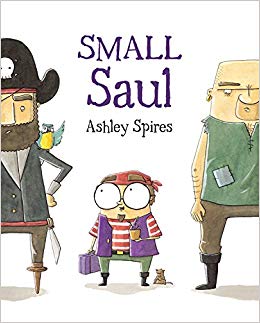
Our inquiry unit for this term with the kindergarteners focused on belonging. There was a deliberate social intent - the hope was for the students to be more welcoming of others in their play time. We read many books that dealt with characters who did not feel like they belonged and how this was resolved. (We read Noisy Nora, Can I Play Too?  [an Elephant and Piggie book], Small Saul, Spork  and Where Oliver Fits.)


Although we did not belabor this point, when it came to working on a name for our various Webkinz (Room K1 has a chicken, Room K2 has a lion fish, and Room 110 has a reindeer), we talked about how giving a name to something or someone shows both how they belong to a group (or family) and also how they are unique or special. We made a conscientious effort to encourage creative naming, i.e. we don't name a girl "Girl" or a dog "Dog", so try to think of something that would be a way of identifying that one Webkinz.

I am relieved and happy to share that we've had our brainstorming, narrowing down of options, and final vote - and the names are actual names!

K1's chicken is called Macdonald.

K2's lion fish is called Unicorn.

Room 110's reindeer is called Santa.

This coming week, we'll use the codes that come with the new toys to "register" them online with their new names. We'll continue to look at tags (which the students have learned indicate who made the toy or piece of clothing), logos (the rainbow W for Webkinz is a significant one and we'll branch out to look at other examples) and ads.