Monday, November 22, 2021

Fidget Toys-Tools (For Me)

 How fascinating - as I was just about to compose my blog post for Monday, I searched the blog archives and discovered I wrote about a very similar topic just two years ago on this blog about my "calming tool corner" and the items I included.

I noticed that the latest trend/fad/must-have-gadget on the playground is a version of "infinity bubble wrap" - soft flexible plastic that has bubbles you can pop in and out. I thought they'd make a great addition to my school library and that I could even use them in these "hygiene heavy" times because they'd be easy to spray down. The students told me about a couple of places I might find them. On Friday at lunch (it was a PA Day so I had a bit more time than usual), I picked up a "mystery box" of fidgets, as well as one just for myself.


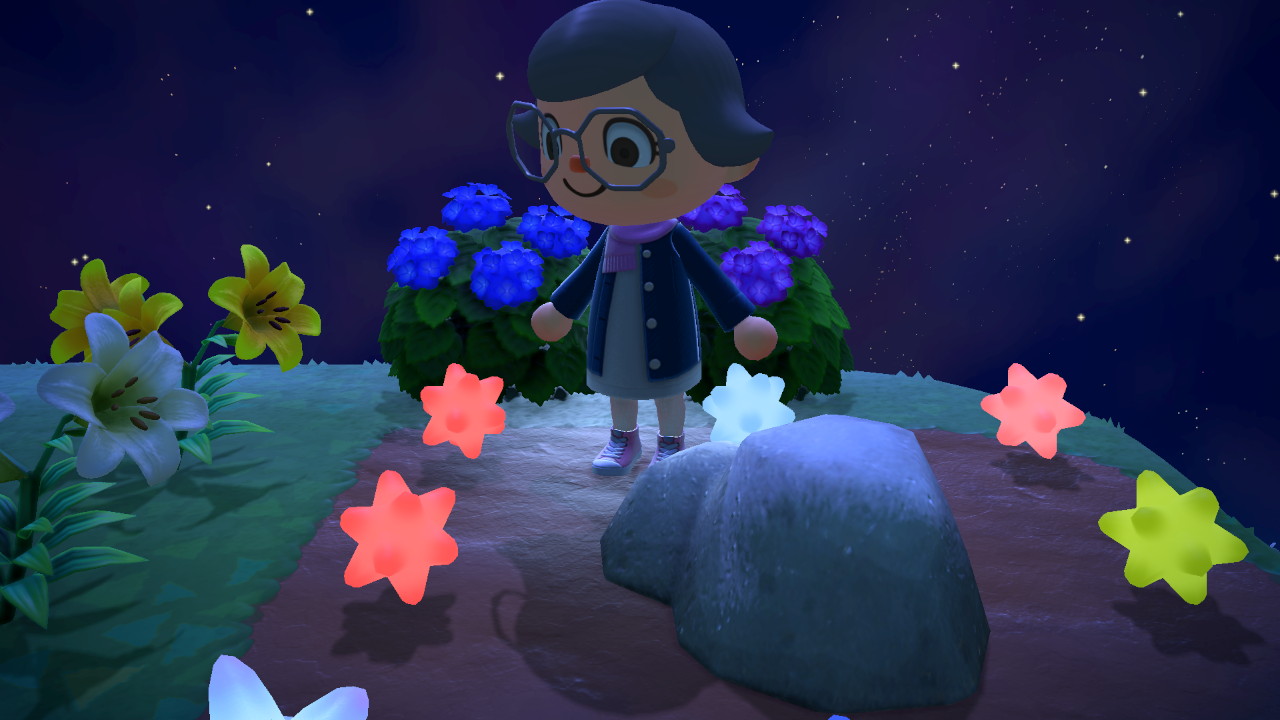
I didn't realize how much I'd like the one I bought for me! I used it while waiting in line at the mall. I used it while watching my offspring play Animal Crossing New Horizons. It's very relaxing. I like the texture both of and on the "dimples" (mine is called a "Simple Dimple") and the soft but satisfying pop it makes (too quiet to disturb others but noticeable enough for me to notice). I used it to show my friend Sarah when we had dinner together on Saturday. (Sarah and I have a lot of exciting plans, but until they get further along, I don't want to share them yet. The last time I did a project with Sarah, we learned about a particular social media platform. We'll have four things to occupy us and all will be marvelous.)

Now, does it totally replace other methods of relaxation? No. Getting a good night's sleep (and supplementing it with a nap when you can) is still beneficial. I did that this weekend. So is taking it easy with those you care about and pacing yourself, which is also why this weekend was so delightful.(We ate out a LOT and even went as a family to see the film Ghostbusters Afterlife. I completed my Queen's University AQ's third Progress Reports without rushing and that made me feel accomplished.) Dare I say it, even exercising is a decent stress-buster (even though I complain every time I go to the gym, and I go three times a week). However, the popper fidget device I purchased for myself was so soothing, I'm considering buying some as Christmas gifts and getting more for my school library. (Maybe I won't think about Christmas quite yet; that's a source of stress instead!)

Monday, November 15, 2021

Animal Crossing New Horizons 2.0

 There are a lot of serious subjects I could write about this week. I considered writing about the lack of supply teachers in the system. I could mention the changes in the various versions of Robert Munsch's book From Far Away. 

All of those topics are valid blog post content. However, I chose to write about something that has reinvigorated family time and provided hours of joy and entertainment - version 2.0 of Animal Crossing New Horizons. 

Our family started playing ACNH in April 2020. I've written about the game and its attraction to me before on this blog. After a while, my son stopped playing, and turned his attention to other video games such as Fate Grand Order, Genshin Impact, Azur Lane, Ark Knights, and Blue Archive. My daughter and I still played ACNH daily. When I asked her what kept her playing, she mentioned that she had formed a habit and that her continued presence would ensure that we kept her favourite villagers on our island. I kept playing because it was something calming, comfortable and comforting; a pleasurable pastime that could be squeezed in at any point of the day or night. 

Nintendo created a huge update to the game (version 2.0) that was launched on November 4. In addition to this free update, a DLC (downloadable content) addition was created that could be purchased. 


WOW!

There are so many additions to the game play that it's a wonder that anyone in my house is getting anything else done! The game developers have done an amazing job of improving so many aspects of ACNH. I asked each of my offspring what their 3 favourite changes / modifications to the games were (excluding the Paradise Planning DLC), and this is everyone's response.

Peter says:


1) Cooking breathes new life into old items, such as pumpkins.

2) Villagers do more interactive things now, like cook and use the punching bags.

3) The new furniture is great.


Mary says:


1) The Roost - the coffee shop owned by Brewster - is so cute and fun.

2) Kapp'n Mystery Island boat tours are so helpful for obtaining seasonal items.

3) Harv's Co-op allows us to talk to vendors and obtain a limited version of their offerings.


Diana says:


1) Having Isabelle announce the NPCs visiting the island each morning gives her character purpose.

2) Improvements to the camera make the photos amazing (especially those food shots).

3) There are so many more uses for the Amiibo cards. 


The Paradise Planning option is THE most popular new feature for our family. Unlike the main island, which is shared by all three of us, Paradise Planning has a storyline for each player. This means we can play at our own pace. The game-within-a-game involves your character "working" for Lottie the otter and her team, building vacation homes according to specifications for various villagers. As the player reaches certain milestones, certain challenges are issues, such as renovating facilities on the island to create schools, restaurants, and hospitals. 

I love watching my own "children" (aged 21 & 19, so not technically kids) play and playing myself. We each have different design approaches. It's neat to compare how each of us interprets the prompts we are given. For instance, all three of us have reached the "make a school" task. Check out how we tackle the project and how different they all look!

Peter's Design Style


Peter plays quickly and enjoys being the first person to reach milestones. His design approach is to select the walls and floors first, and then decide the interiors afterwards. He averages about 3-4 builds a day.


His school resembles a secondary institution. 


Mary's Design Style


Mary is slower than Peter but quicker than me. We've nicknamed her approach the "Jack Kirby method" because she starts in one corner of the room and works her way across and down. (It was said that Jack Kirby, the comic artist, had the ideas in his head and just started drawing from the top left corner.) She is the most detail-oriented of the three of us. She averages about 2-3 builds a day.


Her school is definitely a university lecture hall.


Diana's Design Style


I am the "slowest" player in our group. I don't want to "burn through" the content too quickly, so I only build one vacation home a day. My approach is to look at all the "order" items (these are the ones listed as favourites for the villager and their theme), pile the ones that appeal to me in the middle of the room, and then start sorting from there. (My husband pointed out that this is my cleaning approach as well and may explain why I despair after a while; unlike ACNH where you can move/remove items at the click of a button, it takes longer to rearrange a mess in the middle!) As of November 14, 2021, I have made vacation spots for Eloise the elephant, Goose the chicken, Lucy the pig, Apple the hamster, Julia the peahen, Cherry the dog, Sherb the goat and Cleo the horse.


You can tell that I teach in an elementary school. That's what my education institute looks like. I take WAAAAAAY more photos than the others.


All of this has relevance to teaching and learning.

a) If a task is designed with a combination of a bit of structure and open-endedness, you can get a lot of wonderful variety, as seen by the various schools created in ACNH. 
b) Pacing and options are valuable tools to making experiences successful and educational. 
c) Don't underestimate the power in capturing a moment via a photo - annotating the images make it even more insightful (and I wish I could do this more with my own school-taken pictures). 
d) Relaxing and having fun are good for people's mental health and community-building.

So if you are looking for me, you'll know where to find me if I'm not at school or at the gym.


Monday, November 8, 2021

Listening to Grow in Equity Understanding

 Last week, I was part of the VoicEd broadcast of ONEdMentors called "The Mentoree Lounge". It was an enjoyable episode to record because of my fellow panelists - Noa Daniel, Ramona Merharg, Rolland Chidiac, Elisa Waingort, and Greg Farrell. 


During the conversation, I questioned my own use of the word "paralyzed". I was concerned that it might have been abelist, and so I rephrased my sentence. I'm not pointing this out because I want praise, because it's a long process to monitor yourself and do a better job at being an anti-oppression educator.


I have to say that I do it more by listening than by speaking. Someone once wrote (I'll look for it in my Twitter history - ETA I found a version of it) that if you want to do better, follow more Black, Indigenous, and People of Colour on Twitter and other social media platforms - and just pay attention. Don't feel the need to add in your own $0.02; just listen and think about what you've heard.


This tweet below is an example of "listen".


I'm not a big holiday observer (despite loving costumes, I don't decorate the library for any holidays). However, I am teaching Grade 2 social studies this year, both as a prep subject and as collaborative partner delivery. Traditions and celebrations are part of the curriculum. This social media post made me much more aware about using care when selecting resources to use, especially when this is a celebration that is unfamiliar to many of the students. I chatted with another teacher who is doing her own Grade 2 social studies lessons, and she both spotted the Twitter thread and considered how to alter her approach. (Both of us used Lights for Gita, written by Indo-Canadian author Rachna Gilmore - I just learned as I was composing this blog post that she passed away in February 2021; I'm so sorry to hear this!)

It's so nice not to be wrestling with decisions like this alone. I'm partnering with Connie Chan and Jennifer Cadavez and their virtual kindergarten students on a Community Helpers inquiry. Our goal is to disrupt some of the classist and gendered assumptions around occupations. It's always good to look twice at things - at first, I thought a relevant resource we could use was Amazing Grace by Mary Hoffman, because it talks about what kind of roles actors can play and addresses both race and gender. Fortunately, I reread the book before I decided on using it, and unfortunately, there are some problematic elements that stopped me from using it. (One, the book is thirty years old; two, the author is white and writes about a black girl's experience; three, in one of the pictures, Grace is seen as pretending to be Hiawatha [possibly the Longfellow poem version] and is shown topless with an "Indian" feather headdress.)

Social media has actually been so helpful for me in my learning and unlearning process. There was a tweet that I forgot to like/RT/save about a deaf conference presenter who explained why it is inappropriate to thank the sign language interpreter in the same group as the presenters. I hadn't considered her perspective and it definitely was a valid one. What I might have thought was being appreciative actually negates the work of the deaf expert and aligns his/her accomplishments with that of the translator.

The more I learn, the more I discover that I have so much more to learn. I'm working with our Curriculum Coach, Kin Irving, to help set up the conditions for the staff to revise the SIP (school improvement plan). There are three categories on a SIP: student achievement, equity, and well-being. Kin and I had some great discussions about how to begin these conversations, that need to start with self-reflection and frank observations, in a way that invites honesty and willingness along the journey. I look forward to seeing where this will take us in my school community. 


Monday, November 1, 2021

Costumes - Not Just for Kids

Yesterday was Halloween. My family and I were uncertain about how many trick-or-treaters we would have at our door, as the numbers have been seriously declining over the years. I like to track this sort of data. The first year I counted was 2012 and we had 135 people. In 2014, we had 98 trick-or-treaters. In 2015 we had 121 visitors. In 2016 we had 95. In 2017, we had 90. In 2018, we had 84. In 2019, we had 36 and last year we had none. However, it's not the candy that makes Halloween special for me; it's the costumes.

If you know me, you know I adore costumes. I updated my costume database and I discovered I own 218 costumes. I enjoy dressing up so much that I typically wear two costumes to school when it's October 31 (or the day closest). This year, I was a fly in the morning and some sort of duck/chicken/pelican/bird in the afternoon.


By the way, I made the bird beak mask and it actually moves when I talk. Thank you @ShannieMakes on Facebook and Instagram for the great pattern and tutorial. 

I try to use costumes on more than just a single day a year. I like to make and wear costumes for conventions, and if I can incorporate a costume into a conference presentation, then I do it. (Doug Peterson can attest to this. I've lost count of how many costumes I've worn to ECOO and OLA. I brought an entire suitcase of costumes when I went to AASL.) 

I mentioned my love for costumes in the last of the lecture series that AML produced for Third Age Learning Guelph. It was a very short talk, so I didn't get to explain about why exactly I like costumes and cosplay as much as I do, so this blog will be an opportunity for me to elaborate.

Mental Health - Empowerment

In this article from Inverse, studies suggest a fascinating hypothesis:

These findings suggest even superficial exposure to superheroes might impact our desire to help others. So what happens when we ramp up superhero associations?

Our physicality can impact our behaviour. The subtitle of the article says it succinctly: superhero cosplay (can) make you a better person. When you adopt a heroic persona, you are more confident and act more altruistically and heroically.

This article from Quartz talks about dress-up more in the sense of formal vs casual wear, but it still suggests that our clothes influence how we act, and "dressing up makes people feel and seem more powerful and impacts their thinking and speech".

I'm a pretty extroverted person in a family of introverts. When we cosplay together, I notice my eldest can strike up conversations with strangers, accept compliments more, and speak up and out. It increases her confidence, as this blog associated with Rowan University asserts.


(This photo was taken by Kirill Kovaldin, a photographer. His website is www.alfaprophoto.com)


Creative Outlet and Coping Mechanism

Dressing up allows me to be creative. I love designing outfits, either by sewing fabric or searching thrift stores for clothes that match. 

I located lots of articles that focus on the benefits of children wearing costumes (such as this one from Sigikid or this one from The Genius of Play or this one from Healthline). In these examples, they talk about imagination and expanding communication skills.  Imaginative expression boosts problem-solving and self-regulation. 

These rewards are kid-focused and one needs to refine search keywords to replace "costumes" with "cosplay" for more adult-focused results. That Rowan University article from above suggests that people can relate to the characters they cosplay and can learn from their struggles. A recent York University article on the subject mentions the fulfillment that comes from expressing oneself in a way that is socially acceptable, yet pushes boundaries. 

Other great articles that extol the virtues of cosplaying include this one from BiNews, this one from Trans4Mind, and this one from NPR. 


(This is last year's school Halloween costume - I was a squid.)


(This is a costume my daughter sewed - it's Ralsei from Deltarune.)

There are many other reasons or benefits to using costumes, as this thread from Cosplay.Com shows. I wrote that media experiences such as wearing costumes makes me feel

  • powerful
  • seen
  • creative
  • connected
Cosplaying and costume-wearing needs to be done with adequate considerations (no "cultures as costumes" or blackface attempts, please) but when done appropriately and with forethought, creating and wearing costumes can be fun and rewarding for many. 


Monday, October 25, 2021

Joy Snippets While Some Silently Struggle

Today is Monday, October 25, 2021. Happy Canadian School Library Day! #CSLD2021


It is also Media Literacy Week! #MediaLitWk


There's reason to celebrate, personally. I am back in my school library. Granted, I spend a lot more time shelving books (no outside volunteers permitted and I can't yet assemble my team of student Library Helpers) and sanitizing materials than I ever did before, but I'm very grateful to return to the role, even altered as it is now. I'm also delighted to contribute to the professional development of future teacher-librarians at two wonderful institutions (Queen's University and York University). The Association for Media Literacy lets me do all sorts of things, as one of the two vice-presidents, to promote media literacy in Ontario, which is very rewarding.

Having said that, there are a lot of people in education right now that are NOT okay. I was contracted to write an article for a publication about how funding cuts have impacted school libraries. I did some crowd-sourcing and I was dismayed to hear some of the stories. There were many testimonials, from school library professionals from various different boards, explaining how difficult their jobs have become. A few contacts asked to be cited anonymously. It's unclear if they feared "reprisals" for speaking out; yet they were compelled to share their school realities with me. I need to figure out a way to include more of these perspectives in a helpful way. It was impossible to include everyone's examples but the stress and honesty really struck a chord with me. (When the article goes to press, I'll add a link here so readers can get a glimpse of the hardships.)

I see this even at my own school and in my own board. Educators are taking leaves because the pressure and demands are just too much. Workers are bone-tired and feeling completely overwhelmed. I wish there was more I could do to help my colleagues and friends. Maybe I can lessen their load by co-teaching with them and providing assessments. Maybe I can give advice or just be a shoulder to cry on or a listening ear or a helping hand. (What's with the body parts?) Maybe I can make them laugh or smile a bit with a joke or hot beverage. Whatever I try to do, I hope it helps alleviate the awfulness and spread a bit of joy. Let me end by including this photo that makes me smile - a student reading for pleasure in our renovated (and mostly tidy) school library. 


Monday, October 18, 2021

Talking Like a Teacher

On October 13, 2021, I co-presented a lecture for Third Age Learning Guelph on Finding Trusted Sources and Evaluating Information. 


My fellow speaker and I rehearsed quite a few times prior to our talk, and one thing she recommended to me was not to "talk like a teacher". 

"This isn't an audience of educators; these aren't your students", she cautioned me.


What exactly does that mean? I had a discussion with my husband about the concept and he had a lot of insightful points to make. Technically, he should get "co-authorship credit" for today's blog post.

"Talking like a teacher" can be either an insult or compliment. The comment might reflect more on the speaker than the recipient. 

Teacher Talk Seen As a Bad Thing

My husband theorizes that if someone has had a bad experience conversing with an educator, or a negative opinion of school, then saying someone talks like a teacher is meant to be bad. It suggests that the speaker is condescending, or speaks with excessive authority or from a position "on high". When my siblings were younger and I was in teacher's college, they used to complain that I sounded like a teacher when I talked. I never asked them to elaborate; I just ignored their griping. (After all, my goal was to become a teacher and if I sounded like one, that was good, right?)

The negative connotation of "speaking like a teacher" can even be conveyed from educator to educator, especially if the teaching location is considered. Secondary school teachers sometimes look down on elementary school teachers. High school teachers may judge the way their counterparts communicate as being too juvenile or simplistic, scoffing at the terms or turns of phrases used. (e.g. "boys and girls" / "friends" / "1-2-3, eyes on me!" / "Time to tidy up!") This week I had two separate conversations with colleagues about secondary school teachers dismissing elementary teacher expertise and spoken words because of the panel they taught in was considered "less than" rigorous. (This isn't true of all secondary school teachers; when I had the privilege this past summer of working with a cross-division team of teacher-librarians to revise a board document on school librarianship, there was such an incredible new appreciation of the challenges each type of teacher-librarian dealt with and increased respect on all sides. We are still in touch with each other and so appreciate the time we spent learning from and with each other.)

Teacher talk may also be seen as too exclusive and elitist. I recall my husband asking me to "tone down" the amount of edu-jargon he predicted I would use when I went to our children's parent-teacher interviews when they were in public school. He didn't want me asking about specific examples of "learning goals and success criteria" or "diverse assessment tools". I can't say how successful I was at eliminating my educator vocabulary. It's hard, but not impossible, to "turn off" your "teacher brain". I know that teaching is a significant part of my identity, but our notions of self can evolve over time, as it will probably do when I (eventually) retire. 

Teacher Talk Seen As a Good Thing

Ironically enough, one of the compliments that my co-presenter and I received after our lecture was that someone said they could tell we were teachers. This was intended positively. I think the participant meant that Nina and I were able to convey our message in an understandable fashion, and were able to clearly articulate complex ideas in a way that made sense. We sounded like experts, even though we began our lecture by reminding our listeners that we were not experts on the topic and were only sharing things we had learned ourselves and from others over time.

Talking like a teacher also seems to convey a level of confidence. When I first volunteered for Maker Festival Toronto (before I joined the organization team), I was asked to take a leader-like position on my first day, because it sounded like I knew what I was doing. (The secret, of course, is that educators can fake this kind of assertiveness and knowledge quite well. If our students or the community don't believe we know what we are talking about, they might be less likely to listen.) 

Final Thoughts

I wonder if other professions are ever commented on in similar ways. Has anyone ever said to someone "You talk too much like a doctor" or "You sound like a lawyer"? I was curious if anyone had searched this, so I wanted to see what came up when I typed "talk like ..." into a search engine. I saw "talk like a pirate", "talk like a baby" and "talk like Yoda" - so much for that line of investigation!


Monday, October 11, 2021

Bombing Big and Trying Again

I can tell something is on my mind if I continually bring it up in conversation with different people. Although there's less of a sting present than there was earlier in the week, I still think it'd be therapeutic for me to address it here.

As part of my teaching assignment this year, I teach four classes virtually, for a total of 10 periods. All of these are primary division students. Teaching younger students online is a different kettle of fish from what I did last year, when I pivoted with my Grade 5-6 students back and forth from in-person to online. The younger students aren't as independent as their older counterparts. I notice that for some students, they find it difficult to complete certain tasks that traditionally I would have accomplished easily with pencil and paper. Assignments take much longer to complete, and it isn't clear how much home assistance the students receive. I decided to set up one-on-one interviews with the students so that they could demonstrate their understanding orally, eliminating the issue of managing online documents.

Tangent: I have learned now to clarify whether or not I want solutions or just a listening ear when I describe situations. For the purpose of this post, this is just a vent, and that's why I am not explaining exactly all the tech steps I used.


I couldn't find a Creative Commons visual to illustrate this idea effectively, so I turned to imgflip.com to create a meme. Back to the original story ... 

I set up my small group areas in advance, knowing that it was probably going to be a bit challenging to establish. Thankfully, the virtual team has already attempted something similar with a whole-school event, so I hoped that the prior experience would help ease the transition.

The lesson bombed, big-time. Students couldn't access the area. I removed what I thought was the barrier and tried again. Students still couldn't get where they needed to go. I sent links to various spots. No luck. I actually ran to fetch their regular classroom teacher (who was on her prep) to see if she could advise me. I didn't have the set-up on my computer to mimic what she does for small group work. I set up my personal computer as a second source, but that failed too. This was all happening as nearly twenty students were right in front of me. I felt terrible. Then I heard something that made me feel even worse. I heard a negative comment from a grown-up in the background, criticizing what I was doing.

I addressed the "unseen adults in the background", apologizing for all the snags, but also explaining that teachers aren't trained on how to conduct online classes, so we are all learning as we go and there are bound to be stumbles. 

I'll admit - it hurt.

Thankfully, the colleagues I spoke to were kind and helpful. Thanks Maha, Renee, Jen BC, and others who consoled me and (because I was ready to hear it at that point) offered advice and technology work-arounds. I tried again the next time I saw them and my set-up worked. The only new wrinkle is that I had anticipated conducting 4 interviews per single period, and I'm only completing 1 per period. It looks like I am going to have to use my personal prep time (which lately has been used for sanitizing manipulatives in the library, shelving books, and organizing the 1:1 device roll-out program) to go back on line and conduct more interviews so I can have a chance of completing them sooner. 

So, what's my "lesson learned"? Maybe it's a combination of "if at first you don't succeed, try, try again", "you can't please all the people all the time" and "be gentle with yourself".